

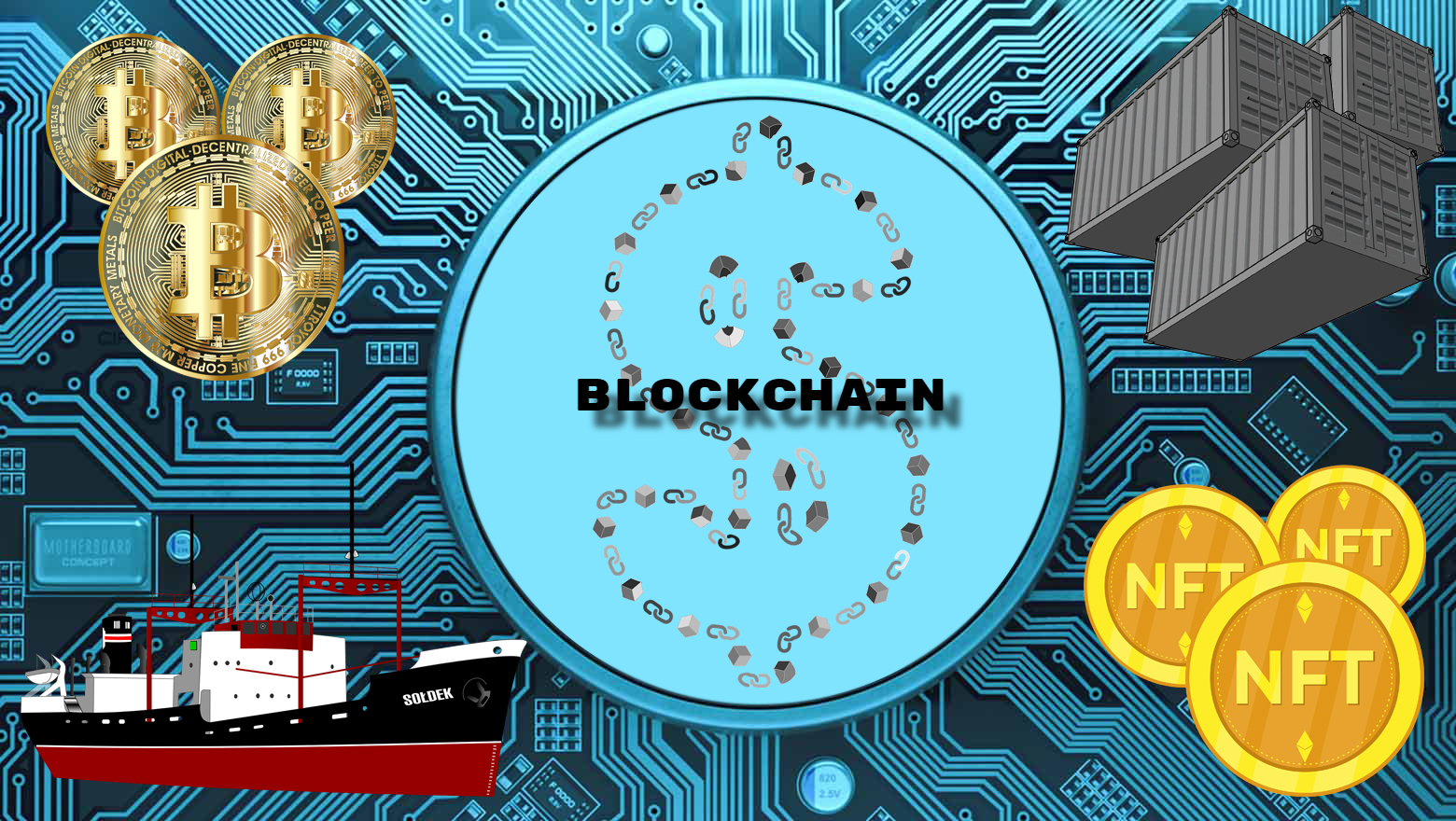

Blockchain, Crypto, and NFTs – A New Game Changer in the Shipping Container Industry (Part 1)
Written on October 12, 2025
by Andrew Malone
In the following categories: Blockchain, Crypto and NFT's in the Shipping Containers World
Blockchain and crypto are no longer buzzwords — they’re powerful technologies reshaping industries across the globe. In the shipping container industry, these innovations are revolutionizing how trade documents, payments, and logistics data are handled.
Since their first major implementation in global shipping in 2018, blockchain-based systems have made cargo handling faster, safer, and more transparent. As of 2025, adoption continues to grow across ports, carriers, and logistics companies worldwide.
The First Blockchain Bill of Lading: A Milestone for Global Trade
One of the earliest success stories came in 2018, when a smart bill of lading was issued using blockchain technology.
Traditionally, these documents could take days or even weeks to transfer between parties. With blockchain, the same process was completed within minutes — securely, digitally, and without the risk of loss, theft, or alteration.
This milestone marked a turning point for global trade logistics, setting the foundation for digital documentation and smart contracts in the shipping industry.
📚 For background on blockchain in logistics, visit:
https://www.ibm.com/topics/blockchain
https://www.maritime-executive.com
Smart Contracts in Action: Shipping Containers and Crypto Payments
Soon after, developers began experimenting with Ethereum blockchain to handle cargo payments through smart contracts.
A test shipment involving two 40ft High Cube containers from Malaysia to Brazil successfully used blockchain to automate the payment process. Here’s how it worked:
-
Funds were held securely in escrow on the blockchain.
-
The payment was automatically released once the containers were confirmed delivered.
-
Both buyer and seller benefited from instant verification and zero manual intervention.
This innovation not only accelerated international trade but also reduced the risks of fraud, non-payment, and documentation errors.
For context on Ethereum-based logistics experiments, see:
https://consensys.net
https://cointelegraph.com
IBM and Maersk’s TradeLens: Blockchain for Global Shipping
A landmark development in blockchain logistics was TradeLens, co-created by IBM and Maersk.
This blockchain-powered platform provides a transparent and secure digital ecosystem for shipping data, enabling smoother collaboration among carriers, ports, customs authorities, and freight forwarders.
As of 2025, the platform (and similar systems) have engaged over 100 global organizations interested in data transparency and efficient trade operations.
Benefits of Blockchain Shipping Platforms:
-
Faster customs clearance and data sharing
-
Reduced paperwork and administrative costs
-
Enhanced cargo visibility and real-time tracking
-
Greater trust among all trade participants
Explore more:
https://www.ibm.com/products/tradelens
https://www.maersk.com/news
Blockchain Insurance: Security Beyond Logistics
Blockchain’s impact isn’t limited to shipping logistics — it’s also reshaping marine insurance.
The world’s first blockchain-based marine insurance platform was developed by EY, Guardtime, and Maersk, in collaboration with Microsoft, Willis Towers Watson, and XL Catlin.
Built on Microsoft Azure, the platform offers:
-
Secure, immutable digital records
-
Faster claim processing
-
Transparent communication between insurers and shippers
It even passed the 20ft Proof of Concept (PoC) certification, demonstrating the technology’s real-world viability for maritime coverage.
Port of Antwerp: Belgium’s Blockchain Innovation
Belgium has also joined the blockchain movement. The Port of Antwerp is working on smart contracts that automate trade documentation — including certificates of origin and phytosanitary certificates.
These documents can now be transmitted automatically between trusted partners, ensuring traceability and safety across the global food supply chain.
For more on the Port of Antwerp’s blockchain initiatives:
https://www.portofantwerpbruges.com
The Future of Blockchain and Shipping Containers
As blockchain adoption accelerates, new possibilities are emerging across the shipping container industry:
-
Smart containers with IoT tracking and blockchain-verified maintenance logs
-
NFT-based digital assets representing ownership of ships or containers
-
Tokenized trade finance, giving smaller businesses access to global shipping networks
In our next article (Part 2), we’ll explore how NFTs and crypto mining in containers are shaping the next phase of digital logistics.
Want to dive deeper? Check out Part 3:
How Blockchain and NFTs Are Transforming the Shipping Container Industry – Part 3
FAQs About Blockchain in the Shipping Container Industry
Q1: What is blockchain used for in shipping?
Blockchain secures and digitizes trade documents, tracks cargo, and automates payments using smart contracts — eliminating manual paperwork and reducing fraud.
Q2: Is TradeLens still active in 2025?
TradeLens and similar blockchain ecosystems have evolved into multiple open-data platforms, enabling broader access to shipping data worldwide.
Q3: How do NFTs relate to the shipping container industry?
NFTs can represent digital ownership of ships, containers, or even historical assets, such as the world’s first NFT “CryptoShip.”
Q4: Can small shipping companies use blockchain?
Yes — modern blockchain tools are scalable, allowing even small freight companies to improve transparency and payment security.
Q5: Is blockchain adoption growing in maritime logistics?
Absolutely. Adoption has expanded across ports in Asia, Europe, and the U.S., supporting faster, safer, and more transparent global trade.
Final Thoughts
Blockchain, crypto, and NFTs are transforming the global shipping container industry from the ground up. What once took weeks — such as document verification, payments, or tracking — can now happen in seconds, securely and transparently.
As technology advances, it’s clear that blockchain will continue to redefine the future of logistics, trade, and maritime operations.
Stay tuned for Part 2, where we’ll explore how shipping containers are being repurposed for crypto mining and how NFTs are unlocking new opportunities in global trade.
