

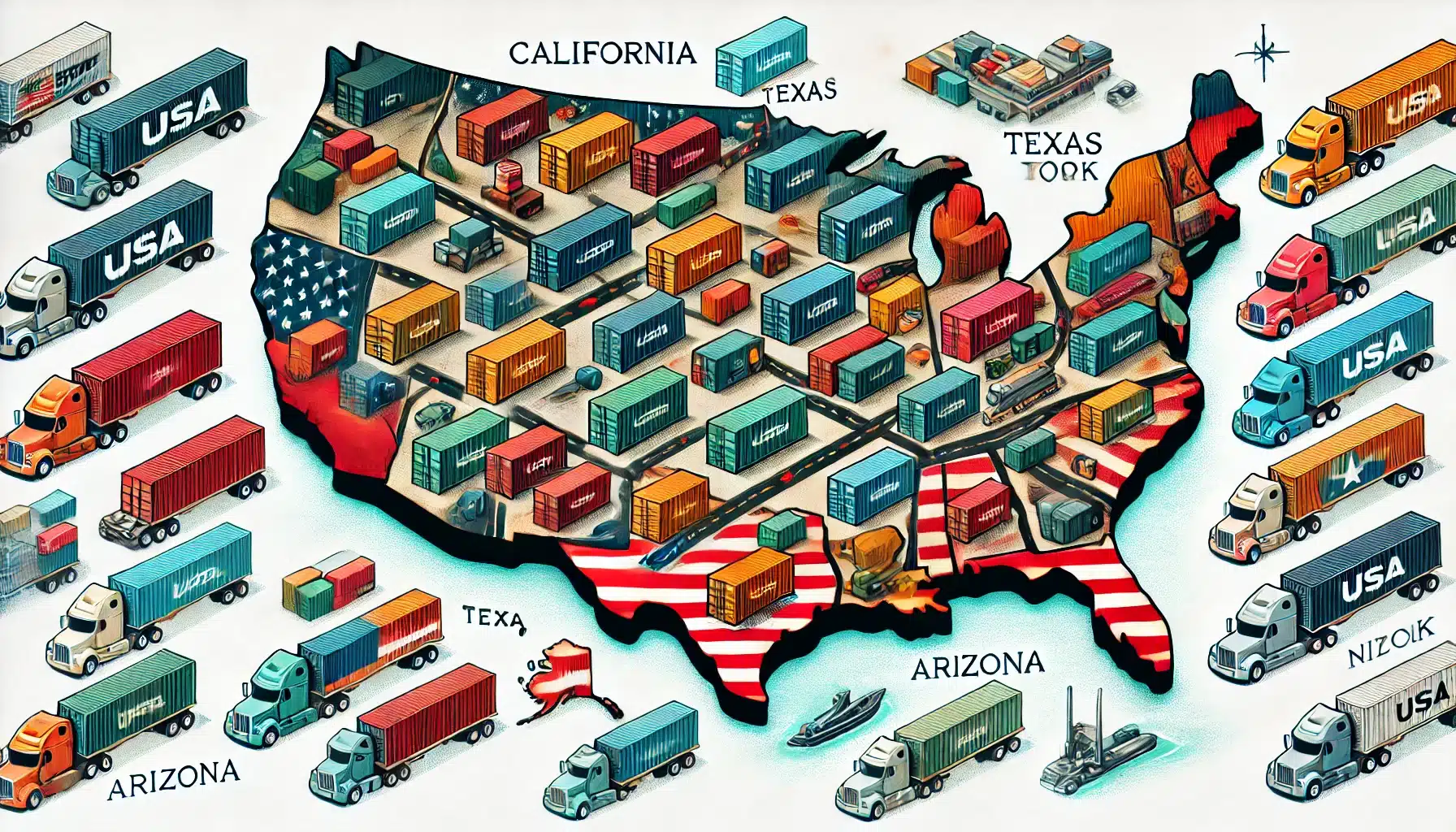

The Current Market for Empty Shipping Containers in the United States: Trends and Predictions for 2025
Written on January 6, 2025
by Randy Lair
In the following categories: Fresh
The market for selling empty shipping containers within the United States is an evolving sector closely tied to global trade, particularly the import of goods from China. As millions of containers arrive annually from Asia, a significant portion is repurposed or sold within the US for various uses, from storage to construction. Understanding the dynamics of supply, demand, and pricing is crucial for stakeholders in this industry.
Current Trends in the US Empty Shipping Container Market
- Supply Challenges The supply of empty shipping containers in the US is highly dependent on imports from China. While the influx of containers surged during the pandemic-driven e-commerce boom, a recent moderation in trade volumes has created regional imbalances. Coastal cities like Los Angeles and New York often have an oversupply of containers, while inland areas and smaller markets face shortages.
- Demand Drivers Empty containers are increasingly in demand for diverse applications:
- Storage Solutions: Businesses and individuals alike use containers for secure and portable storage.
- Construction: The popularity of container-based architecture, including homes, offices, and retail spaces, continues to grow.
- Agriculture and Logistics: Farmers and supply chain operators use containers for equipment storage and transportation.
- Pricing Trends Prices for empty containers have fluctuated significantly. In coastal areas with an oversupply, prices can drop significantly, making them attractive for bulk buyers. Conversely, regions facing shortages often experience inflated prices, especially for high-quality or specialized containers.
Regional Imbalances and Inventory Management
- Coastal Oversupply: Ports such as Los Angeles, Long Beach, and Newark see a steady influx of containers, leading to oversupply and storage challenges. Many containers remain idle, creating opportunities for buyers in these regions to negotiate lower prices.
- Inland Shortages: In states like Arizona, Texas, and parts of the Midwest, there is often a shortage of empty containers due to limited backhaul routes and higher transportation costs. This imbalance drives up prices and increases demand for efficient inventory redistribution.
- Strategies for Redistribution: Logistics companies are leveraging technology and partnerships to improve the flow of containers from oversupplied coastal areas to inland markets. Rail and trucking networks play a pivotal role in addressing these imbalances.
Predictions for the Empty Shipping Container Market in 2025
- Increased Investment in Infrastructure As the demand for empty containers grows, investments in storage facilities, refurbishment centers, and transportation networks are expected to rise. This will help streamline the redistribution process and reduce regional disparities.
- Sustainability Initiatives Repurposing shipping containers for construction and other uses aligns with the push for sustainable practices. Expect an uptick in businesses offering container modification services and promoting eco-friendly applications.
- Price Stabilization With better inventory management and redistribution, prices for empty containers are likely to stabilize. However, ongoing inflation and fuel costs could still exert upward pressure in certain areas.
- Technological Integration Technology will play a larger role in managing container inventories. Platforms using AI and blockchain will enhance transparency, track container availability, and optimize pricing based on demand and location.
- Emerging Markets for Containers As industries continue to innovate, new uses for containers will emerge, expanding their market beyond traditional applications. For example, they may find increased use in renewable energy projects or as modular solutions for disaster relief.
Conclusion
The market for empty shipping containers in the United States is set for growth and transformation. Addressing supply chain inefficiencies and regional imbalances will be critical to meeting rising demand. By embracing innovation and sustainability, businesses can capitalize on the opportunities this dynamic market offers in 2025 and beyond.
