

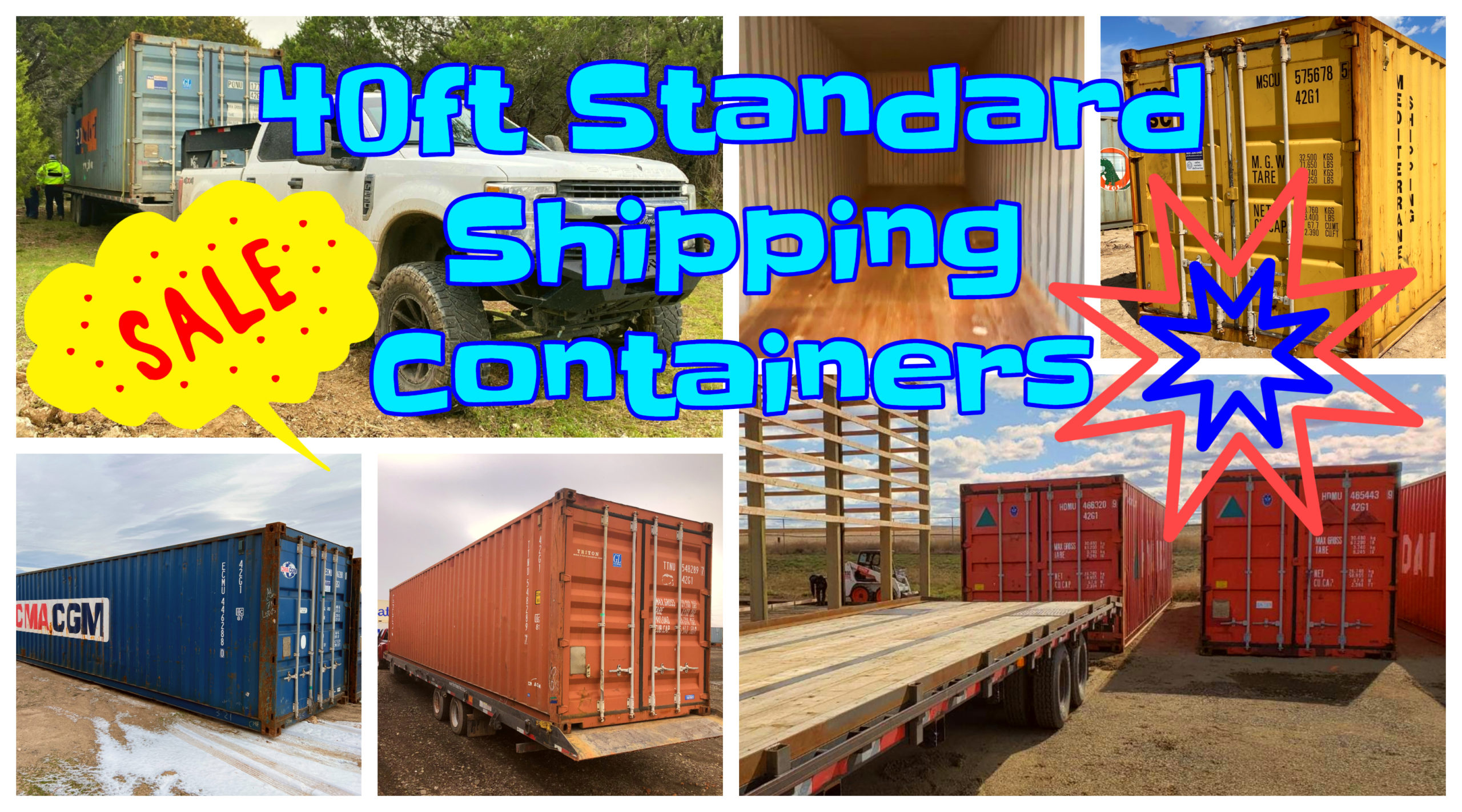

40ft Shipping Containers for Sale: Complete Buyer's Guide
Written on October 4, 2025
by Adrian Stan
In the following categories: Shipping Container Sales
The 40ft shipping container is the workhorse of the industry — the size used for the vast majority of global freight and the default choice for buyers who need serious storage capacity, a job site solution that won't run out of room, or a starting point for a container conversion project. This guide covers what you actually need to know before buying: dimensions, grades, what fits inside, how pricing works, and what to expect on delivery day.
40ft Standard Container Dimensions
The nominal "40 foot" length refers to the external measurement. Interior usable space is slightly less — knowing the interior dimensions is what matters for planning storage layout or a conversion build.
| Measurement | External | Internal |
|---|---|---|
| Length | 40' 0" | 39' 5.7" |
| Width | 8' 0" | 7' 8.6" |
| Height | 8' 6" | 7' 9.9" |
| Door opening (W × H) | 7' 8.1" × 7' 5.75" | |
| Cubic volume | 2,385 cubic feet | |
| Max load capacity | 57,759 lbs | |
| Empty weight | 8,380 lbs | |
The interior width is consistent with the 20ft container — just under 8 feet, accommodating standard 48" × 40" pallets two across. The 40ft length doubles the pallet count and total cubic volume compared to a 20ft unit, making it the natural choice when storage volume is the primary driver.
40ft Standard vs. 40ft High Cube: Which Do You Need?
The most common comparison 40ft buyers face is standard vs. high cube. The only difference is interior height — the high cube adds exactly one foot (9'6" external vs. 8'6"), but that foot matters in specific use cases.
| 40ft Standard | 40ft High Cube | |
|---|---|---|
| Interior height | 7' 9.9" | 8' 9.9" |
| Best for | General storage, job sites, most freight | Tall equipment, workshops, container homes, crypto mining builds |
| Price premium | Base price | ~$300–$700 more depending on grade and depot |
| Availability | Widest availability | High demand — moves faster when price drops hit |
If you're unsure, default to the high cube — the modest price premium is worth the extra headroom for nearly any use case, and resale value tends to be stronger. Browse 40ft High Cube containers here.
Container Grades Available
YES Containers offers 40ft standard containers in three main grades. The grade you choose affects condition, price, and suitability for your specific application.
| Grade | Condition | Best For | Price Range (2026) |
|---|---|---|---|
| Used / WWT | Surface rust, dents, faded paint — structurally sound, no leaks | Storage, job sites, agricultural, industrial | $2,500–$4,500 |
| One-Trip (New) | Single ocean crossing — near-new condition, minimal wear | Conversions, retail, branded builds, visible placements | $4,500–$6,500 |
| Double Door | Used or one-trip with doors on both ends | Drive-through access, staging, high-traffic storage | $3,500–$5,500 |
Used WWT containers show cosmetic wear — that's expected and normal. Every unit is confirmed wind and water tight before delivery. Colors on used units are not guaranteed; containers are loaded first-off-the-stack. If you need a specific color (white, beige, tan, gray), that can be requested subject to depot availability.
What Fits in a 40ft Container
A 40ft container holds roughly twice the volume of a 20ft. In practical terms:
- Approximately 20–22 standard pallets floor-loaded in a single layer
- Contents of a 3–4 bedroom home
- Full equipment load for a mid-to-large construction crew
- A standard pickup truck or similar-size vehicle (with room to spare)
- Bulk agricultural supplies — seed, fertilizer, maintenance equipment
- Retail inventory overflow for a mid-size commercial operation
For conversion projects, the 40ft footprint gives you approximately 320 square feet of floor space — comparable to a studio apartment or a substantial workshop.
What Drives the Price of a 40ft Container
Container pricing is depot-specific, not a national fixed rate. Several variables affect what you'll actually pay:
- Grade — WWT used is the most affordable starting point; one-trip carries a $1,500–$2,000 premium over comparable used stock
- Depot proximity — Delivery runs approximately $500 for the first 100 miles from the nearest depot, then ~$5/mile beyond. Factor this into your total budget before comparing prices
- Current inventory levels — Depots with surplus stock periodically drop prices. These windows are real but limited — acting when a price drop is active is the best way to land at the low end of the price range
- Container type — Double door and open-side variants carry a modest premium over standard configurations
To get a current price at the nearest depot: request a quote by ZIP code or call (800) 223-4755.
Common Use Cases for 40ft Containers
- Construction job sites — Secure overnight storage for tools, materials, and equipment across multi-phase builds. See: How Construction Companies Use Containers on Job Sites
- Agricultural storage — Equipment, maintenance supplies, and seasonal inventory on farm properties without permanent outbuildings
- Commercial overflow — Retail, manufacturing, and distribution businesses using containers as flexible inventory buffer without committing to warehouse leases. See: Secure Storage for Businesses and Warehouses
- Container conversions — Workshops, offices, retail pop-ups, and residential builds using the 40ft footprint as the structural shell. See: Repurposed Containers: Storage, Offices, and Beyond
- Disaster preparedness and staging — Emergency equipment storage and supply staging for contractors, municipalities, and large properties
Delivery: What to Expect
40ft containers are delivered via gooseneck tilt-bed trailer. The delivery process is straightforward — the trailer positions, tilts, and the container rolls off onto your prepared surface. No crane required for standard ground-level placement.
Key things to confirm before scheduling delivery:
- Access clearance — A 40ft container on a tilt-bed needs approximately 80–100 feet of clear straight-line access to position and offload. This is more than the 20ft equivalent — tight driveways and overhead obstacles are the most common delivery complications.
- Door orientation — Decide which direction the doors face before the truck arrives. Repositioning after placement requires equipment.
- Ground preparation — Level, stable surface required. A gravel base or railroad ties are recommended for long-term placements to improve drainage and prevent sinking.
- Weight limits — Confirm your driveway or access road can support the delivery truck weight if you're on a private road with restrictions.
Purchase Options
- Buy outright — Locks in current pricing. Best for long-term use, conversion projects, or when a depot price drop is active.
- Rent-to-Own (Pay on Delivery) — Secure your container now, finalize payment when it arrives. Learn more about Pay on Delivery.
Related Reading
- 20ft Shipping Containers: Buyer's Guide
- Steel Storage Containers for Long-Term Commercial Use
- New vs. Used Shipping Containers: What Businesses Should Know
- Mobile Job Site Offices Using 20ft and 40ft Containers
- Conex Storage Containers: What to Know Before You Buy
Key Takeaways
- Interior dimensions are 39'5" × 7'8" × 7'10" with 2,385 cubic feet of usable space — roughly double the 20ft
- Used WWT is the right grade for storage and job sites; one-trip for conversions and visible placements
- High cube adds one foot of interior height for ~$300–$700 more — worth it for most use cases
- Delivery needs 80–100 feet of clear access — confirm before scheduling, especially on tight residential or rural properties
- Total delivered cost = container price + delivery; get a ZIP-based quote before comparing prices across suppliers