

Port Congestion Shows No Sign of Easing on the US and Canada Shores
Written on October 10, 2025
by Adrian Stan
In the following categories: Container Shipping Industry, News
Despite hopes of normalization, port congestion across the United States and Canada continues to frustrate shippers, carriers, and importers alike. Nearly three years after the pandemic’s peak disruption, the ripple effects are still visible along the West Coast — from Los Angeles to Vancouver — with vessel queues and logistical bottlenecks showing few signs of relief.
Pandemic-Era Patterns Still Shape 2025 Logistics
Consumer demand across North America remains elevated, while workforce shortages, increased e-commerce activity, and lingering container imbalances keep pressure on ports.
The COVID-19 pandemic first triggered this crisis, but even in 2025, the consequences persist. Major terminals have improved operations, yet shipping volumes and vessel sizes continue to test their limits.
Key Factors Driving Ongoing Congestion:
-
Shift in buying patterns: Online retail and just-in-time fulfillment remain dominant.
-
Dock labor shortages: Staffing gaps due to retirement and slow recruitment.
-
Equipment imbalances: Empty containers still pile up inland, slowing returns to Asia.
-
Infrastructure strain: Many terminals still operate near or above design capacity.
Data Source: https://www.marinetraffic.com and https://www.freightwaves.com
Current State of West Coast Ports (Fall 2025)
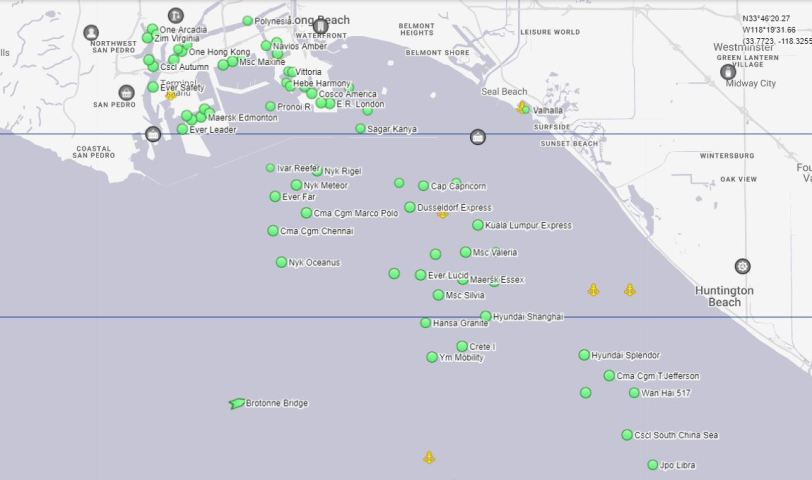
Tracking data from MarineTraffic and Lloyd’s List show that congestion persists, especially at major container gateways.
🚢 Southern California Ports
The twin ports of Los Angeles and Long Beach remain the most congested.
-
Over 30 ships often queue in San Pedro Bay, waiting for available berths.
-
The waiting line can stretch 10–12 miles offshore during peak arrival periods.
-
Average dwell time: 4–6 days, up from 2 days pre-pandemic.
⚓ Northern California
-
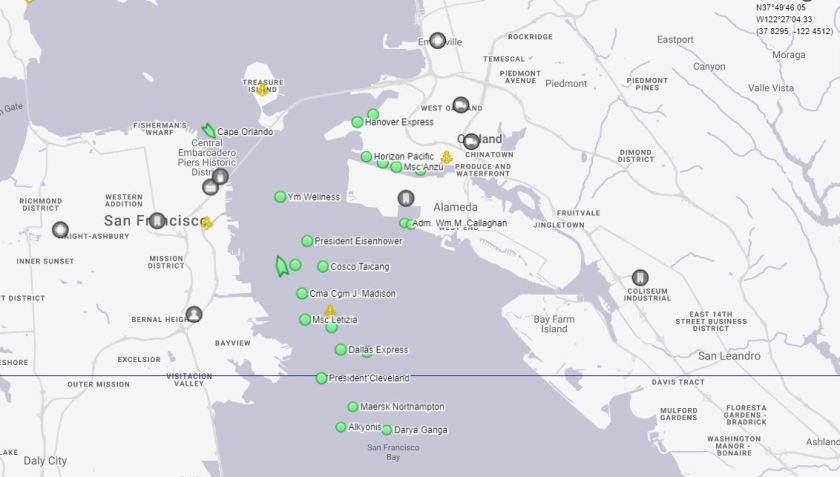
At the Port of Oakland, around 10–12 vessels are typically waiting in the San Francisco Bay, facing limited crane availability and gate hour constraints.

🌲 Pacific Northwest & Canada
-
Ports in Seattle, Portland, and Vancouver remain under strain, though less severely.
-
Vancouver, Canada’s largest port, regularly reports 15+ vessels waiting to berth.
-
Local authorities cite increased container repositioning from Asia and rail backlogs moving eastward.
More port data: https://www.portoflosangeles.org and https://www.portvancouver.com
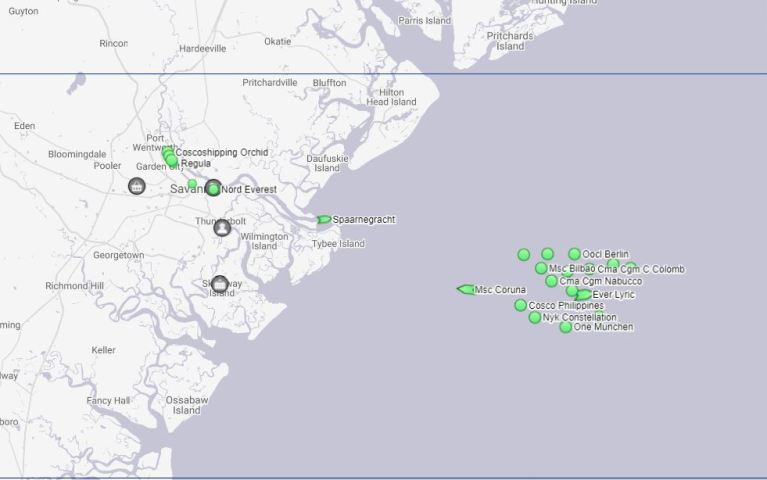
East Coast Ports: Less Severe but Still Affected
While the East Coast has avoided the worst congestion, it hasn’t been immune to disruption.
At the Port of Savannah, for example, queues fluctuate between 8–15 vessels on anchor — largely driven by rerouted Transpacific cargo aiming to bypass the congested West Coast.
Other ports like New York/New Jersey and Charleston have managed better throughput, thanks to expanded berths and automation investments.
Learn more about East Coast performance: https://www.joc.com/port-news
The Ripple Effect: From Asia to North America
The port delays in North America have also caused ripple effects across Asia.
In Singapore, one of the world’s busiest transshipment hubs, turnaround times for large vessels have risen from 2 days to 5–7 days, creating scheduling headaches for global carriers.
This slowdown impacts:
-
Container repositioning
-
On-time delivery rates
-
Available freight capacity for exporters
The result is a complex, interconnected congestion pattern stretching across the Pacific — a reminder that a single region’s bottlenecks can destabilize global logistics networks.
Industry Response: Fighting a Global Bottleneck
Shipping lines and logistics providers are adjusting operations to reduce congestion impacts:
-
Dynamic rerouting: Diverting vessels to less crowded ports like Houston and Prince Rupert.
-
Slow steaming: Adjusting vessel speeds to stagger arrivals.
-
Data-driven scheduling: Using AI systems for berth visibility and predictive ETA adjustments.
-
Infrastructure expansion: Ports like Los Angeles and Vancouver continue deepening berths and automating terminals.
While these initiatives have helped, normalization may not arrive until 2026, according to analysts at Drewry and FreightWaves.
For port strategy updates: https://www.drewry.co.uk and https://www.hellenicshippingnews.com
What This Means for Container Buyers and Shippers
Persistent congestion translates into longer lead times, higher delivery costs, and container price volatility.
If you rely on containerized shipping, consider:
-
Booking freight early and securing guaranteed slots.
-
Partnering with reliable suppliers offering flexible delivery options, like:
-
Buying your own containers to avoid equipment shortages:
FAQs: Port Congestion in the US and Canada (2025)
Q1: Why does port congestion keep happening?
High consumer demand, uneven equipment distribution, and staffing shortages keep major terminals overloaded.
Q2: Which ports are most congested in 2025?
Los Angeles, Long Beach, Oakland, and Vancouver remain the hardest-hit, though Savannah and New York occasionally experience surges.
Q3: Has congestion improved since 2023?
Slightly — turnaround times are better, but recurring backlogs show that the logistics system remains fragile.
Q4: How does port congestion affect shipping container prices?
Fewer available vessels and delays increase storage and demurrage costs, keeping container prices elevated.
Q5: When will port congestion fully ease?
Experts predict gradual relief by mid-to-late 2026, depending on global demand, fuel costs, and infrastructure progress.
Final Thoughts
Port congestion on the US and Canadian coasts remains one of the biggest ongoing challenges in global trade. Even as container prices stabilize and new technologies improve logistics visibility, the supply chain is still healing from the disruptions of 2020–2024.
For businesses depending on containerized shipping, the key is preparation — plan early, diversify routes, and partner with trusted logistics providers.
👉 Get a Quote today or call (800) 223-4755 to speak with a Yes Containers representative about reliable delivery and storage solutions.