

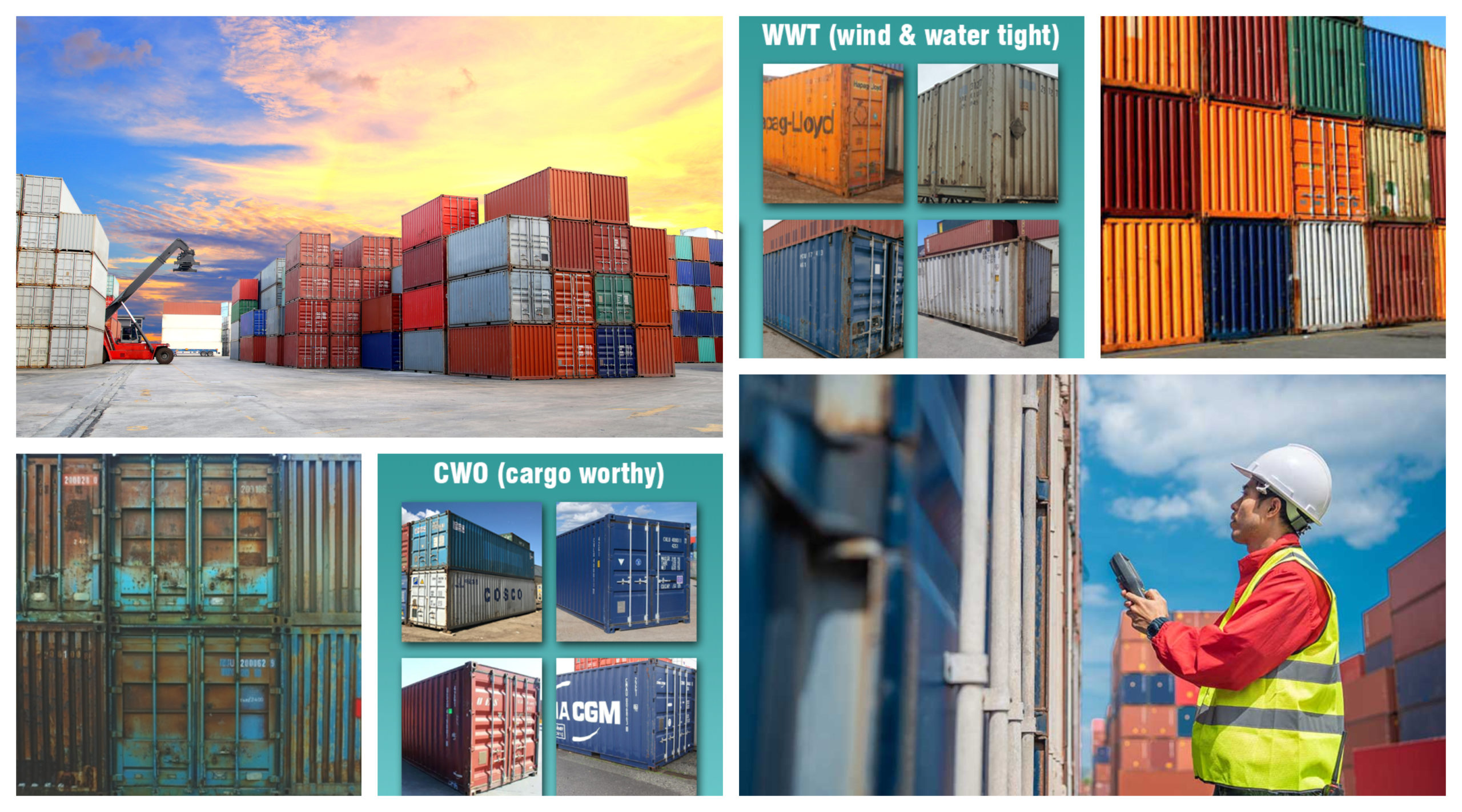

Grades and Certifications of Shipping Containers
Written on November 11, 2025
by Adrian Stan
In the following categories: Container Shipping Industry
If you’ve ever browsed shipping containers for sale, you’ve likely seen terms like WWT, CW, or IICL—but what do they actually mean? Understanding shipping container grades and certifications helps you make an informed purchase, whether you’re buying for storage, construction, or resale. Let’s break down the most common grades and what each certification means in plain language.
New, Near New, or One-Trip Containers
New or One-Trip containers are essentially brand new. They’ve made only one journey from the factory to their first destination and are typically less than five years old. These containers meet Cargo Worthy standards, carry a valid CSC Plate, and have a clean interior and floor with minimal surface wear.
These are ideal for businesses or homeowners who want the cleanest, longest-lasting option available. You can explore examples on our 40ft High Cube New Shipping Containers page.
A Grade Containers
A Grade containers meet Cargo Worthy standards and also include a valid CSC Plate. Expect an interior that’s 80% mark-free, minimal surface corrosion, and minor cosmetic dents. The floors will be clean with light scratches but free of deep gouges. These containers are often near-new, refurbished, or lightly used — great for businesses seeking durability without the cost of brand-new units.
B Grade Containers
B Grade containers may be Cargo Worthy or Wind and Water Tight (WWT), with or without a valid CSC Plate. They may show minor surface rust, staining, or small repairs, but they remain fully sealed against the elements. Perfect for long-term storage container use or property storage solutions.
C Grade Containers
C Grade units are typically older and show more wear — visible dents, rust, and markings both inside and out. Floors may have staining or moderate delamination. While still structurally sound, these are better suited for static storage or modification projects rather than active shipping. Many people use them for workshops or shipping container shops.
D Grade Containers
D Grade containers are considered As Is and generally not suitable for cargo or high-value storage. They may have visible holes, extensive corrosion, or floor damage. These are often purchased for parts, repurposing, or scrap steel.
Salvage Containers
Salvage-grade containers are the lowest condition available—often missing doors, floors, or wall panels. These units are typically recycled for metal or used for creative projects that don’t require structural integrity.
Common Shipping Container Certifications
In addition to grades, shipping containers often carry various certifications or labels that define their condition and compliance. Here’s what the most common ones mean:
- IICL (Institute of International Container Lessors): The strictest repair and condition standard used by global container leasing companies.
- CW (Cargo Worthy): Indicates a container is suitable for international shipping under TIR/UIC/CSC standards, typically verified by a third-party surveyor.
- WWT (Wind and Water Tight): Ensures the container is fully sealed—no visible light inside when doors are closed. Great for safe on-site storage.
- CSC (Convention for Safe Containers): A globally recognized plate certifying a container meets international safety standards for transport.
- ACEP (Approved Continuous Examination Program): An ongoing inspection program that eliminates the need for periodic CSC re-inspection while under ownership.
- ISO (International Organization for Standardization): Governs the standard dimensions and structural integrity of all containers used in global trade.
Understanding Company Grading Standards
It’s important to note that container grading isn’t universal. Each supplier may use slightly different internal definitions for A, B, or C grades. These classifications usually refer to cosmetic condition rather than structural quality.
At YES Containers, we ensure that every shipping container for sale meets or exceeds WWT or CW standards, depending on your needs. You can also take advantage of our Pay on Delivery program to inspect your container before paying—ensuring full confidence in your purchase.
Key Takeaway: Choosing the Right Shipping Container Grade
Understanding shipping container grades helps you make a smart, cost-effective purchase. For long-term storage or modifications, a WWT or CW unit is ideal. For international shipping, look for valid CSC certification. If you need help deciding, reach out to our experts at YES Containers for tailored advice and transparent pricing.
Explore our latest shipping containers for sale or learn more about nationwide delivery options today.
