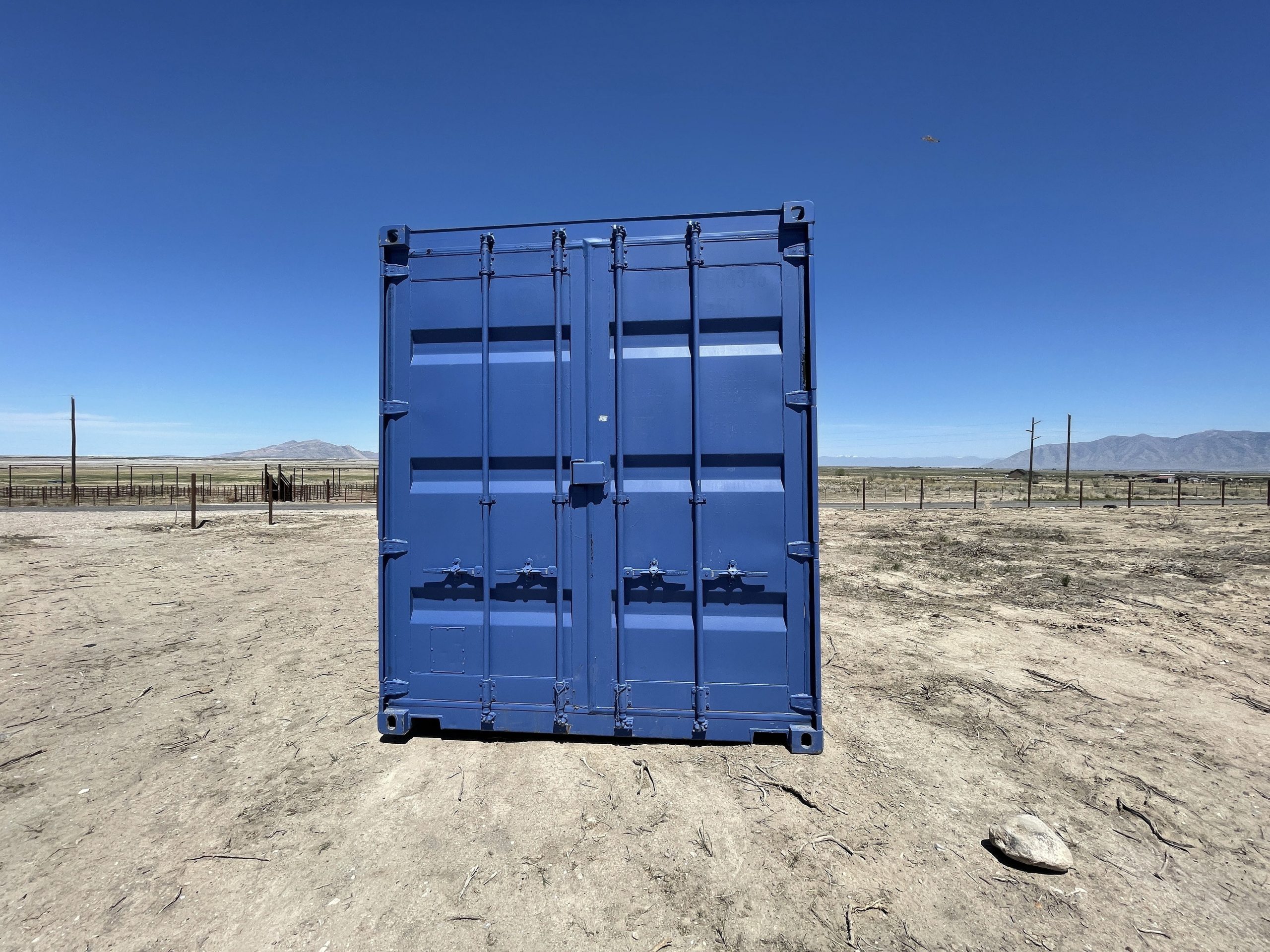

How to Prepare Your Site for Shipping Container Delivery
Container delivery looks simple on paper — a truck backs in, tilts the bed, and the container slides off. In practice, the difference between a smooth delivery and a costly rescheduled attempt comes down to site preparation. This guide walks you through every requirement: ground conditions, clearance, turning space, delivery method, and what to do during the lead time before the truck arrives.
Ground Preparation: The Most Important Step
A level, stable surface is the single most critical part of site preparation. Containers placed on uneven or unstable ground will rack — meaning the frame twists slightly, pulling doors out of alignment. Once a container racks, the doors may never seal or close properly again without structural intervention.
The container must sit level both side-to-side and front-to-back, with all four corner castings supported. All surface water and drainage must route away from underneath the container to prevent moisture accumulation against the steel base rails.
Concrete Slab
Best long-term solution. Level, stable, permanent, and provides excellent drainage and airflow if poured with a slight grade.
Compacted Gravel Pad
Most common solution. Provides good drainage and stability when compacted adequately. Easy to install and cost-effective for most sites.
Railroad Ties or Concrete Sleepers
Support the four corner castings above soil level. Inexpensive and effective for sites where a full pad is impractical. Ensure they are level with each other.
Direct Soil Contact — Avoid
Placing a container directly on bare soil traps moisture against the base rails, accelerates corrosion, and risks uneven settlement over time.
Site Preparation: Step by Step
Work through these steps before calling to schedule delivery. Many delivery problems — and the fees that come with them — are preventable when site conditions are evaluated and addressed in advance.
-
Confirm Vertical and Width Clearance
Walk the entire route from the road to the placement location and measure clearance at every potential obstacle. The tilt-bed trailer sits higher during unloading than in transit — overhead clearance requirements are more generous than they look.
Clearance Type Minimum Required Vertical — overhead 15–17 ft minimum Width — side to side 10–13 ft minimum Total run — 20ft container 40–50 ft Total run — 40ft container 60–70 ft Check for: overhead power lines, tree branches, roof overhangs, fences, retaining walls, parked vehicles, and narrow entry corridors. Any single obstacle below minimum clearance can prevent the delivery from proceeding. -
Verify Turning Radius for the Delivery Truck
Tilt-bed delivery trucks are long vehicles that require substantial turning space to enter a property, position for unloading, and exit safely. Tight corners, narrow driveways, and limited maneuvering space are among the most common causes of failed delivery attempts.
Turning Space Requirements
- Approximately 40–50 ft turning radius
- Wide driveway or gate opening along the full route
- No sharp 90° corners along the access path
- Stable, firm surface throughout the turning area
Common Access Problems
- Narrow private roads under 12 ft wide
- Low bridges or underpasses on the route
- Steep or long driveways with grade changes
- Tight gate entrances or posts that limit width
- Soft, muddy, or unstable surface in turning area
-
Confirm Slope Limits at the Placement Location
Containers must be placed on a surface that is close to level. A slope that looks manageable by eye can easily exceed safe delivery limits when a tilt-bed trailer is involved. The slope affects both the unloading mechanics and the container's long-term structural performance once placed.
- Maximum slope of approximately 5 degrees — roughly a 9% grade
- Minimal side-to-side tilt across the placement area
- Gradual grade changes preferred over sudden drops or rises
- Stable, compacted surface that won't shift during unloading
- Slopes exceeding limits may require grading before delivery
-
Plan Container Orientation Before the Truck Arrives
Once a container is placed, repositioning it requires another truck visit — at additional cost. Decide orientation before delivery day and communicate it clearly when scheduling. Consider which direction the doors should face, whether side access matters for your workflow, and whether future access to the container for loading needs to be kept clear.
Orientation Decisions to Make
- Which direction should the end doors face?
- Does a side door or open side need clearance on a specific side?
- Is there future vehicle access needed along any wall?
- What is the best door position for your daily workflow?
How to Communicate Orientation
- Mark the placement area with stakes or paint
- Send a site photo with a marked placement line
- Note door direction in writing when scheduling
- Be on-site during delivery to confirm positioning
-
Choose the Right Delivery Method for Your Site
Most container deliveries use a tilt-bed trailer — the container slides backward off the tilted bed and is set on the ground. This works well when site access is open and clearance requirements are met. Some sites require crane-assisted placement due to access constraints, obstacles, or unusual placement locations.
Tilt-Bed Delivery — Standard- Site access is straight and open
- All clearance requirements are met
- Placement area is reachable by trailer
- Ground surface is firm and level
Crane Delivery — When Required- Container must be placed behind structures
- Access width is too limited for tilt-bed
- Vertical clearance restricts tilt-bed operation
- Container must be lifted over obstacles
Permits: Crane-assisted delivery, temporary road closures, and oversized vehicle access may require local permits. Check with your municipality before scheduling if any of these apply to your site. -
Send Site Photos Before Scheduling
A short set of photos sent before scheduling can prevent the vast majority of delivery surprises. Photos showing the access route, gate or entry width, placement area, and any obstacles give the delivery team the information needed to plan correctly — and flag anything that requires adjustments before the truck is dispatched.
- Entry point from the street — show driveway width and any gates
- Full access route from entry to placement location
- Placement area — show available space and surrounding obstacles
- Any overhead obstacles such as power lines, trees, or overhangs
- Prepared ground surface — show what the container will sit on
-
Account for Weather and Seasonal Conditions
Delivery timing should account for seasonal weather that can affect both the access route and the placement surface. Heavy rain saturates ground that appeared firm days earlier. Snow and ice create hazards for both the delivery truck and placement accuracy. Plan for flexibility when weather is uncertain.
Conditions That May Delay Delivery
- Heavy rain — saturates and softens ground surfaces
- Snow or ice — reduces traction and creates placement risks
- High winds — can affect crane operations if applicable
- Saturated ground — firm ground can become soft overnight
How to Reduce Weather Risk
- Schedule with a flexible date window where possible
- Install gravel pad before winter if delivery is planned for spring
- Avoid scheduling on days with forecast heavy rain
- Confirm surface condition the morning of delivery
-
Plan Ahead for Future Container Relocation
If there is any chance the container will need to be moved later — whether the business changes, you are renting the property, or your project evolves — placement decisions made today directly affect how difficult and expensive that relocation will be.
- Maintain a clear truck access path to the container at all times
- Avoid building permanent structures directly against the container
- Keep clearance space on at least one long side for future equipment access
- Do not plant trees, pour concrete, or install fencing that blocks future pickup access
- Consider whether the container might be sold or returned — and plan accordingly
While You Wait for Delivery: What to Do
From the time you place your order to the day the container arrives, there is typically a lead time that ranges from a few days to a couple of weeks depending on your location and the configuration you ordered. This window is productive time — use it to make sure everything is ready so the day of delivery is straightforward.
The tasks below take a few hours total and can prevent the most common delivery-day complications. Buyers who complete them before delivery day rarely have surprises.
Complete Your Ground Preparation
If you need to install a gravel pad, level the area, or set railroad ties — do it now. Rushing ground prep on delivery day creates problems. Allow time for compaction to settle.
Re-Measure Clearances After Any Changes
If you trimmed a tree, removed a fence post, or moved equipment since scheduling — re-measure the affected clearances to confirm they still meet minimums. Things shift.
Send Updated Site Photos If Anything Changed
If conditions on your site changed after scheduling — new obstacles appeared, ground conditions shifted, or you changed placement plans — contact your specialist with updated photos.
Review the Container Inspection Checklist
Know what to check before accepting delivery: size, configuration, door operation, floor condition, structural integrity, and placement orientation. Inspection takes about 10 minutes but can prevent accepting a non-conforming container.
Clear the Access Route and Placement Area
Move vehicles, equipment, materials, and debris from the full path the truck needs — from the street to the final placement spot. Do this the day before, not the morning of.
Confirm the Delivery Window and Stay Available
Confirm the expected delivery window with your specialist. Be reachable on the delivery day — the driver may need to confirm final placement details or check access before turning in to the property.
Container Delivery Readiness Checklist
Run through every row before calling to schedule delivery. If any item is not yet confirmed, address it first — it is far easier to resolve these before a truck is dispatched than after one arrives and cannot complete the delivery.
| Requirement | Specification to Confirm |
|---|---|
| Ground surface prepared | Compacted gravel, concrete slab, or railroad ties — not bare soil |
| Container sits level | Level side-to-side and front-to-back across all four corners |
| Vertical clearance confirmed | 15–17 ft minimum along full access route |
| Width clearance confirmed | 10–13 ft minimum along full access route |
| Turning radius available | 40–50 ft for tilt-bed trailer maneuvering |
| Slope within safe limits | Maximum approximately 5 degrees at placement location |
| Truck maneuvering length | 40–50 ft for 20ft containers; 60–70 ft for 40ft containers |
| Delivery method confirmed | Tilt-bed or crane — correct method selected for site conditions |
| Container orientation planned | Door direction and placement marked before driver arrives |
| Site photos sent | Entry, access route, placement area, and any obstacles documented |
| Access route cleared | All vehicles, equipment, and debris removed from the full path |
| Buyer present on delivery day | Available during delivery window for placement confirmation |
Schedule Your Container Delivery with YES Containers
Once your site is ready, a container specialist can help confirm your order, review site conditions, and coordinate delivery scheduling. Pay-on-Delivery is available on qualifying orders — inspect the container before completing payment.
- Site photo review before scheduling
- Delivery method confirmation for your site conditions
- Placement and orientation guidance
- Pay-on-Delivery available on qualifying orders
- Inspection guidance provided before delivery day
After Delivery: Maintain What You've Built
Good site preparation and a smooth delivery get your container in place. These guides cover what to do next to keep it performing well for years.