

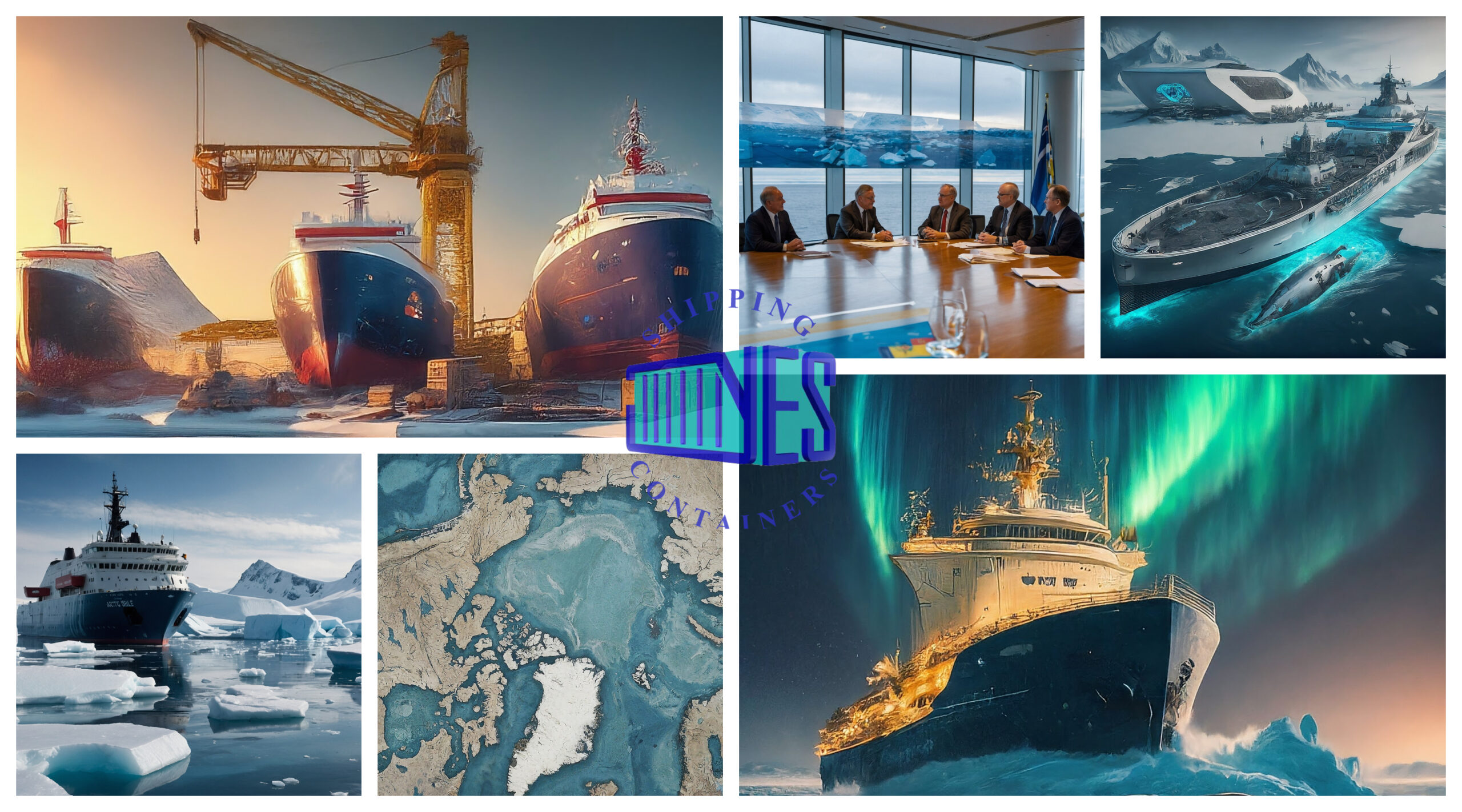

How the ICE Pact Is Strengthening the Arctic Presence of the US, Canada, and Finland
Written on November 17, 2024
by Randy Lair
In the following categories: Fresh
In a major step toward securing the future of Arctic operations, the United States, Canada, and Finland have signed a groundbreaking alliance — the ICE Pact (Icebreaker Collaboration Effort) — during the 2025 NATO Summit in Washington, D.C.
This trilateral partnership aims to boost Arctic and Antarctic icebreaking capabilities, strengthen industrial cooperation, and counteract the growing influence of Russia and China in polar regions. The ICE Pact is more than a military or industrial agreement — it’s a strategic blueprint for protecting economic, environmental, and security interests in the rapidly changing Arctic.
Overview
What Is the ICE Pact?
The ICE Pact unites three Arctic-focused nations — the U.S., Canada, and Finland — in a coordinated effort to expand polar shipbuilding and research capacity. Together, they plan to produce a new interoperable fleet of polar icebreakers, share advanced technology, and coordinate scientific and defense operations.
A senior U.S. official explained:
“The ICE Pact will reinforce the message to Russia and China that the United States and its allies intend to doggedly pursue collaboration on industrial policy — to increase our competitive edge in strategic industries like shipbuilding, and to build a world-class polar icebreaking fleet at scale.”
This pact underscores a long-term strategy to modernize Arctic infrastructure, improve maritime mobility, and enhance joint naval readiness across the Northern Hemisphere.
Economic and Industrial Impact
The ICE Pact is expected to generate significant economic and industrial growth across North America and Scandinavia. Shipyards in the U.S., Canada, and Finland will see a rise in production orders for next-generation icebreakers — creating jobs, strengthening local economies, and reinforcing each country’s role in global shipbuilding.
The initiative also aims to:
-
Increase shipyard interoperability between partner nations.
-
Attract allied buyers, boosting export opportunities.
-
Support workforce development through exchange programs and joint training.
This aligns closely with the U.S. goal of revitalizing strategic manufacturing industries, a key focus of recent infrastructure and defense policy initiatives.
The Strategic Context: Countering Russia and China
Russia currently operates the world’s largest fleet of icebreakers, many of which are nuclear-powered, giving it a dominant position in Arctic navigation. Meanwhile, China, despite not being an Arctic nation, has declared itself a “near-Arctic state” and partnered with Russia under the Polar Silk Road initiative — part of Beijing’s larger Belt and Road Initiative.
Through the Polar Silk Road, China seeks to develop new shipping lanes, resource extraction sites, and scientific outposts — further expanding its global reach.
The ICE Pact directly challenges these ambitions, ensuring that democratic Arctic nations maintain technological, economic, and environmental control in the region.
For a detailed background on China’s Arctic strategy, you can read the Council on Foreign Relations’ Arctic overview.
Advancing Scientific Collaboration and Environmental Stewardship
Beyond defense and trade, the ICE Pact promotes scientific exploration and environmental cooperation in both the Arctic and Antarctic. The partnership supports joint research initiatives in:
-
Climate science and ice monitoring
-
Sustainable Arctic resource management
-
Polar logistics and energy innovation
This complements existing international efforts like the Arctic Council’s environmental initiatives, which encourage sustainable development and ecological preservation in polar zones.
By aligning with such frameworks, the ICE Pact ensures that increased industrial activity goes hand-in-hand with responsible environmental governance.
Security and Strategic Importance of the Arctic
As climate change continues to open previously inaccessible sea routes, such as the Northern Sea Route and Northwest Passage, the Arctic is quickly becoming one of the most valuable strategic corridors for global trade.
Shorter routes between Asia, Europe, and North America could cut shipping times by up to 40%, reducing fuel costs and emissions. But this accessibility also introduces new security vulnerabilities — and competition.
The ICE Pact aims to protect these emerging trade routes by:
-
Expanding the polar icebreaker fleet (targeting up to 90 vessels).
-
Enhancing joint military readiness in extreme environments.
-
Strengthening maritime surveillance and communication systems.
To learn more about how icebreakers influence global shipping efficiency, read our article How Shipping Containers and Global Supply Chains Are Connected.
A Boost for U.S. Polar Shipbuilding
The U.S. Polar Security Cutter program, a cornerstone of America’s Arctic strategy, has faced repeated delays and budget overruns. The ICE Pact could provide much-needed momentum by pooling resources and technical expertise from Finland and Canada — both experienced in cold-weather vessel construction.
This collaboration could fast-track the delivery of new U.S. Coast Guard polar icebreakers, essential for maintaining maritime security and scientific presence in the Arctic.
Frequently Asked Questions (FAQ)
1. What is the purpose of the ICE Pact?
The ICE Pact aims to strengthen Arctic and Antarctic operations through coordinated icebreaker development, research, and defense collaboration between the U.S., Canada, and Finland.
2. Why is the Arctic region so strategically important?
The Arctic offers shorter global trade routes, vast untapped natural resources, and key strategic access points between continents — making it a hotspot for economic and military competition.
3. How does the ICE Pact affect shipping and trade?
The pact enhances polar infrastructure and navigation, reducing shipping risks while improving connectivity for containerized freight and global logistics.
4. Will this pact help counter China’s Arctic expansion?
Yes. The ICE Pact directly strengthens the Arctic presence of Western allies and counters China’s Polar Silk Road initiative, ensuring continued maritime freedom and democratic governance in polar waters.
5. What are the environmental benefits?
The ICE Pact supports sustainable Arctic research, prioritizing climate monitoring, ecological conservation, and responsible development practices.
Conclusion
The ICE Pact is more than an industrial collaboration — it’s a strategic framework for shaping the future of Arctic navigation, security, and sustainability. By combining their industrial strengths and research capabilities, the U.S., Canada, and Finland are sending a clear message: the Arctic must remain a zone of peace, cooperation, and innovation.
As climate change accelerates and geopolitical competition intensifies, the ICE Pact stands as a beacon of unity, ensuring that Arctic shipping and polar research remain aligned with global stability and shared prosperity.
For more insights on shipping trends, logistics innovation, and geopolitical trade impacts, visit the YES Containers Blog or explore our guide on How Global Trade Reached $33 Trillion in 2024.
📞 Call (800) 223-4755 | Get a Quote | Learn About Our Services
