

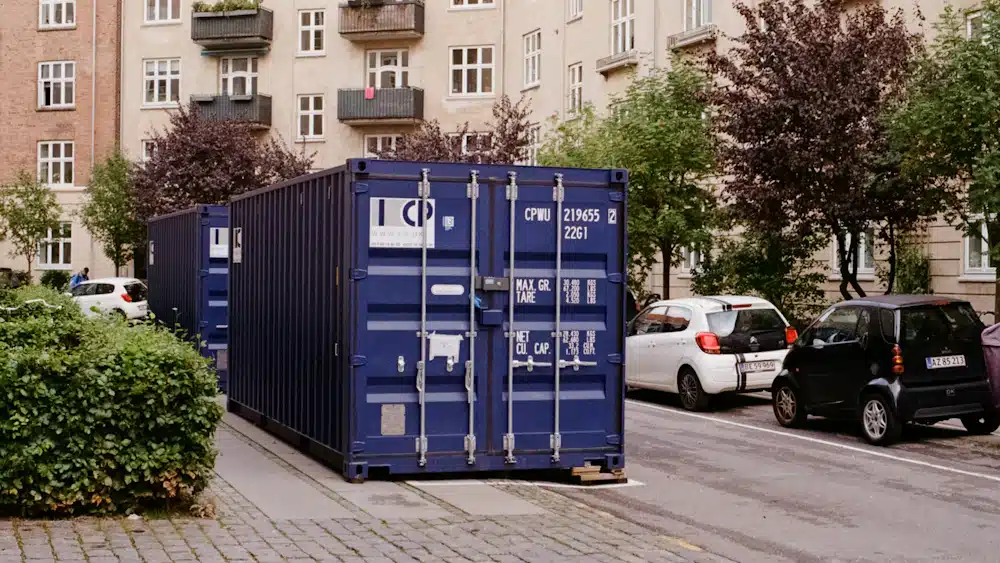

How to Anchor a Shipping Container Against Wind and Hurricanes
Written on November 12, 2026
by Gabriel B.
In the following categories: How To
To anchor a shipping container, connect its four bottom corner castings to something heavier and fixed in the ground: bolt-down brackets into a concrete slab or footings, steel plates cast into concrete and welded to the corners, or rated ground anchors tied to the corners with steel straps or cable. Weight alone is not a plan. An empty container is light for its size, and a big, flat steel wall catches a lot of wind. If your container sits in a hurricane, tornado or open-plains wind area, anchor it before the season, not when the forecast turns.
Does a shipping container need to be anchored?
Many don't. A container on a sheltered lot in a mild-wind area sits for decades without moving. But it is worth anchoring when:
- You are in a hurricane-prone coastal area (the Gulf Coast, Florida, the Carolinas) or an area with frequent severe thunderstorms or tornadoes.
- The site is open, exposed or on a ridge, with nothing breaking the wind.
- The container is empty or lightly loaded most of the time.
- It has been converted into an office, workshop or living space, where your local building department will usually treat it as a structure and expect an engineered foundation and tie-down.
- It sits close to a house, a road or a neighbor's property, where any movement could hurt someone.
The Federal Alliance for Safe Homes, a nonprofit backed by FEMA and NOAA partners, puts it simply for sheds and outbuildings: securely anchor them to a permanent foundation, or use the straps and ground anchors made for manufactured homes. A storage container is the same problem in steel.
How heavy is a container, and why that is not enough
Empty weights vary by builder, but they sit in a narrow range. Ocean Network Express lists its dry containers at about 4,740 lb for a 20ft, 8,027 lb for a 40ft and 8,157 lb for a 40ft high cube. Other references put a typical 20ft closer to 5,000 lb, such as Container xChange at 2,300 kg.
| Size | Typical empty weight | Side wall facing the wind |
|---|---|---|
| 20ft standard | About 4,700 to 5,100 lb | About 20ft x 8.5ft |
| 40ft standard | About 8,000 to 8,300 lb | About 40ft x 8.5ft |
| 40ft high cube | About 8,150 to 8,600 lb | About 40ft x 9.5ft |
That is heavy to lift but light for the size of the wall. A long side presents 170 to 380 square feet of flat steel to the wind, and wind pressure rises with the square of wind speed, so doubling the speed roughly quadruples the push. Hurricane categories start at 74 mph on the Saffir-Simpson scale, and Category 3 begins at 111 mph. Wind also creates lift over the roof, and a container sitting on blocks or sleepers lets wind get underneath. Sliding and tipping are both possible long before the steel itself fails.
For the exact force on your container, a structural engineer uses your local design wind speed, exposure and height. That is the right call for any occupied or converted container. For a storage box, the methods below cover most sites.
Four ways to anchor a shipping container
Every good method uses the corner castings. They are the strongest points on the container, built to carry the full stacked load of shipping, and they have openings designed for twist locks and lashing. Avoid fixing anchors through the floor or the thin corrugated walls.
1. Bolt-down brackets on a concrete slab or footings
A steel bracket slots into each bottom corner casting and bolts into concrete with wedge or epoxy anchors. It is the most common upgrade for containers on a slab or concrete piers, and it can be undone if you ever move the container. The concrete has to be thick and sound enough to hold the bolts, and the container has to sit level so all four brackets seat properly. Our guide to foundation options for shipping containers covers slabs, piers and footings.
2. Welded to embedded steel plates
For a permanent install, steel plates are cast into concrete footings at each corner, and the corner castings are welded to them once the container is set. This is the strongest connection and what engineers usually specify for container offices, homes and storm shelters. It is also the hardest to undo, so use it only where the container will stay.
3. Ground anchors with straps or cable
On a gravel or soil pad, screw-in helical or auger anchors go into the ground near each corner, and galvanized steel straps or wire rope run from the anchor heads to the corner castings, tensioned tight. This is the same idea as manufactured-home tie-downs. For reference, Florida's manufactured-home rules require each ground anchor on newer homes to have a 4,000 lb working load and a 6,000 lb ultimate load. Use anchors with a published rating, not generic stakes.
The weak point is the soil. Sand, wet clay and loose fill hold far less than firm ground, so anchor length and count depend on what is under your container. A good gravel pad helps; see ground preparation for shipping containers.
4. Linking containers together
Two or more containers placed side by side or end to end can be joined with bridge clamps or connectors through the corner castings. A connected group is much heavier and wider than one box, so it resists tipping better. It is not a substitute for anchoring in a hurricane zone, but it helps and costs little. Stacking adds height and wind load, so stacked containers need twist locks or welded connections and, for anything permanent, an engineer.
Which method fits your site
| Site | Good fit | Notes |
|---|---|---|
| Existing concrete slab or driveway | Bolt-down brackets | Check slab thickness and condition before drilling |
| New concrete footings or piers | Brackets or welded embed plates | Plan anchors before the pour |
| Gravel pad or firm soil | Ground anchors with straps or cable | Anchor size depends on soil |
| Several containers on one site | Connectors plus one of the above | Connected groups resist tipping better |
| Converted or occupied container | Engineered foundation and tie-down | Usually required for a building permit |
Placement choices that reduce wind load
- Point a short end into the usual wind. The end walls are a fraction of the size of the side walls, so less area faces the strongest gusts.
- Keep it low. Sit the container on a level pad or low footings rather than tall blocks that let wind under the floor.
- Use shelter you already have, such as a building or tree line, but keep clear of trees that could fall on the roof.
- Load heavy items low and evenly if the container is for storage. Extra weight helps, but it never replaces anchors.
Placement is easiest to get right on delivery day, so decide where the container goes before the truck arrives. The checklist in do you need a permit for a shipping container also covers setbacks that limit where it can sit.
Before a hurricane or severe storm
- Check every anchor, strap and bolt. Retighten straps and look for rust at the connections.
- Close and lock both doors. Open doors catch wind and put strain on the hinges and frame.
- Clear loose items around the container that could become flying debris.
- Move valuables up off the floor in flood-prone areas. Anchoring keeps a container in place, but water can still get in through the door seals.
- Take dated photos of the container, the anchors and what is inside for an insurance claim. Whether your policy covers it at all is worth checking now; see does homeowners insurance cover a shipping container.
After the storm, look for movement at the corners, bent brackets or a door that no longer closes cleanly, which can mean the frame has shifted. Water on the floor afterward may be a leak or condensation; our post on water inside a shipping container explains how to tell.
Check local rules first
Anchoring rules are local. Some cities and counties in hurricane areas treat short-term portable storage units differently from a container you own. Miami Gardens, Florida, for example, requires a portable mini-storage unit to be removed from the premises when a hurricane watch is issued for the county. A container converted into an office, shop or home usually has to meet the building code, including an approved foundation and tie-down. Call your building or zoning department before you pour concrete, and keep the answer in writing.
Getting a container for a high-wind area
Anchoring works the same on any standard container, new or used, as long as the corner castings are solid and free of heavy rust. If you are buying for the Gulf Coast or Florida, see our Florida shipping containers page or browse containers in Tampa, Houston and New Orleans. Prices change with size, condition and delivery distance, so the quickest way to a real number is a free quote.
Frequently Asked Questions
Can a shipping container blow over in a hurricane?
Yes, an unanchored container can slide or tip in very high winds, especially when it is empty, sitting on blocks, or on an exposed site. A 20ft container weighs only about 4,700 to 5,100 lb empty while its side wall is roughly 170 square feet. Anchoring the four corner castings to concrete or rated ground anchors is the reliable fix.
What is the best way to anchor a shipping container?
Welding the corner castings to steel plates cast into concrete footings is the strongest method and the usual choice for permanent or occupied containers. Bolt-down corner brackets on a concrete slab are the most common removable option. On gravel or soil, rated helical ground anchors with steel straps or cable to each corner work well if sized for the soil.
Can I anchor a shipping container without concrete?
Yes. Screw-in helical or auger ground anchors placed near each corner and tied to the corner castings with galvanized straps or wire rope work on firm soil or a gravel pad. Holding power depends on the soil, so sandy or wet ground needs longer or more anchors.
Do I need a permit to anchor a shipping container?
Anchoring hardware on a storage container often needs no separate permit, but pouring a slab or footings may, and a container converted into an office or living space usually needs a building permit with an approved foundation and tie-down. Rules vary by city and county, so check with your local building department first.
Should the doors be open or closed during a storm?
Closed and locked. Open doors catch wind, strain the hinges and let rain and debris inside. Close both doors and engage the locking bars before the storm arrives.