



How to Fix Stiff Shipping Container Doors
Written on November 28, 2025
by Anna Nichita
In the following categories: How To, Shipping Container Maintenance & Fabrication
When your shipping container arrives, one of the first things to inspect is how easily the doors open and close. Over time, container doors can become stiff—especially if the unit has been sitting unused or stored in a depot for long periods. Knowing how to fix shipping container doors early prevents bigger maintenance issues later. Here’s a quick guide to identifying and fixing the most common door problems.
Common Causes of Stiff Shipping Container Doors
Hard-to-open doors are a frequent issue, especially with used containers. The good news: it’s usually easy to fix. Whether your container is new or secondhand, start by checking these key problem areas.
1. Check Container Leveling
Uneven ground is one of the top causes of stiff or misaligned doors. If your container isn’t sitting level, the doors won’t line up correctly with the frame. Use a level to check if all corners are even. If one corner is low, lift it slightly with a jack and place treated lumber or concrete blocks underneath until the container is stable and level.
Pro Tip: Always place your container on solid, compact ground. For long-term placement, consider adding gravel or a concrete pad to improve drainage and stability. Learn more about setup best practices in our shipping container delivery guide.
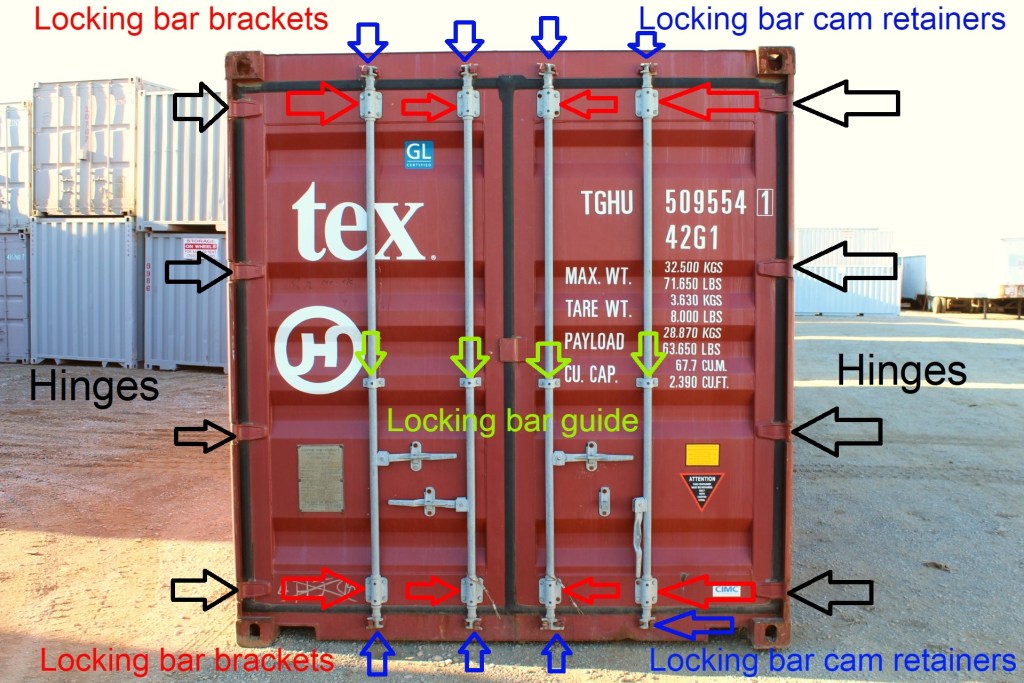
2. Lubricate Hinges and Locking Bars
Hinges, locking rods, and cam keepers can seize up over time—especially in damp or coastal environments. Avoid using only light lubricants like WD-40, which evaporate quickly. Instead, use a heavy-duty grease or a marine-grade product to keep parts moving freely. Apply it generously, then open and close the doors several times to work the lubricant in.
- Recommended lubricants: Fluid Film, Armor All, or multipurpose lithium grease.
- Frequency: Every 3–6 months depending on climate and usage.
3. Inspect and Adjust Door Seals
The rubber seals on container doors keep moisture and pests out—but sometimes they can make closing difficult, particularly on newer or refurbished units. If the seal feels too tight, you can slightly trim the thicker part of the gasket while leaving the outer flap intact. This keeps the container wind and water tight (WWT) while easing door operation.
If your seals are brittle, cracked, or missing sections, consider replacing them entirely to maintain proper protection from the elements.
New vs. Used Containers: What to Expect
Even new shipping containers can develop stiff doors if they’re placed unevenly or stored for long periods. Used units, especially those rated Cargo Worthy (CW) or Wind and Water Tight (WWT), are more likely to need lubrication and realignment. Always level the container before applying lubricants—otherwise, the problem will persist.
If you’re unsure which container type best fits your needs, check out our shipping containers for sale page or contact YES Containers for expert guidance on container selection and setup.
Regular Maintenance Prevents Bigger Issues
To keep your doors functioning smoothly year-round, follow these simple steps:
- Keep the container level and off soft ground.
- Lubricate hinges and locking bars every few months.
- Clean and inspect door seals annually.
- Open the doors regularly to prevent sticking or rust buildup.
Key Takeaway: How to Fix Shipping Container Doors for the Long Term
Learning how to fix shipping container doors is an essential part of container maintenance. By ensuring your unit sits level, keeping hinges greased, and maintaining the rubber seals, you’ll extend the lifespan of your container and avoid costly repairs. These simple steps ensure your storage container remains easy to access and fully functional year after year.
For more maintenance advice or to schedule a shipping container delivery, contact YES Containers at (800) 223-4755 or get a free quote today.