


What Size Shipping Container Do I Need? A Practical Sizing Guide
Written on September 21, 2025
by Gabriel B.
In the following categories: Container Buyers Guides, How To
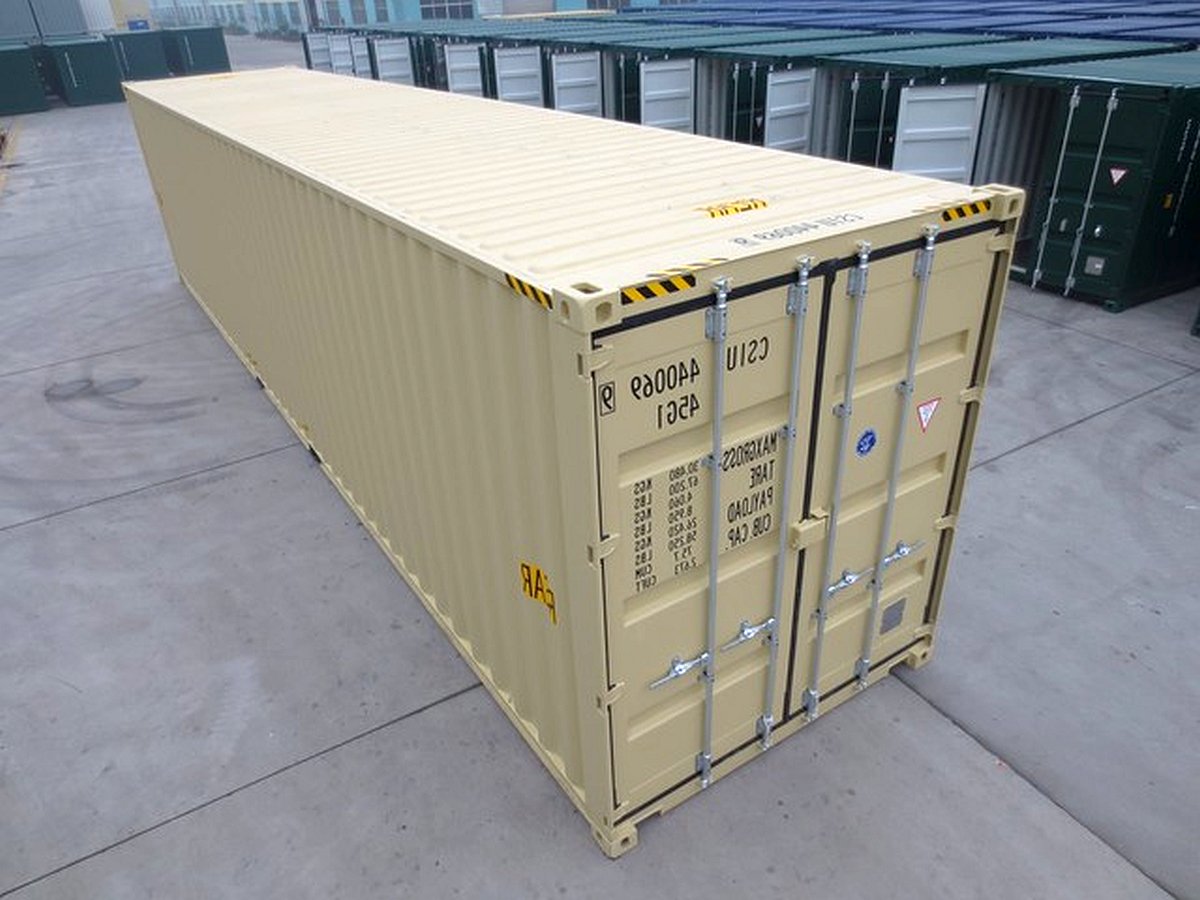
Most buyers need either a 20ft or a 40ft container, and three checks settle which one: the longest item you will store, the floor space you need, and whether a delivery truck can reach the spot. If your longest item is under about 19 feet and you need less than about 150 square feet of floor, a 20ft works. If you need more floor than that, or anything longer, a 40ft usually costs less per square foot than two 20ft boxes. Choose a high cube if anyone will work inside or you will stack goods high.
This guide walks through those checks in order, with the real interior measurements, door openings and rough prices, so you can order once and order right.
Check 1: Your Longest and Tallest Item
Start with the single biggest thing that must go inside, not the total volume. Containers are sold by outside size, but what matters is the inside and, even more, the door. The figures below are typical published specifications from Shapiro's ocean container specifications and Röhlig's dry container sheet. Units from different manufacturers vary by an inch or so.
| Container | Inside length | Inside width | Inside height | Door opening (W x H) |
|---|---|---|---|---|
| 20ft standard | 19'4" | 7'8" | 7'10" | about 7'8" x 7'6" |
| 40ft standard | 39'5" | 7'8" | 7'10" | about 7'8" x 7'6" |
| 40ft high cube | 39'5" | 7'8" | 8'10" | about 7'8" x 8'5" |
A few rules follow from this table:
- Longer than 19 feet: you need a 40ft. A 20ft is about 8 inches short of its outside length inside.
- Taller than about 7'6": the item will not clear a standard door even if it would fit under the ceiling. A high cube door is close to a foot taller.
- Wider than about 7'6": no standard end door will take it. Look at open side containers, where a whole side wall opens.
- Vehicles: measure bumper to bumper and allow room to open a door and walk past. Our guide on fitting cars in a 20 foot container covers this in detail.
High cubes come in 20ft and 40ft lengths and add about a foot of interior height. The high cube vs standard comparison explains when that extra foot is worth paying for.
Check 2: How Much Floor You Need
Once the biggest item fits, work out floor space. Storage fills a container by floor area far more than by height, because few people stack loose items above head height safely.
| Container | Floor area (approx.) | Cubic capacity | 48 x 40 in pallets, one layer* |
|---|---|---|---|
| 20ft standard | about 148 sq ft | about 1,170 cu ft | about 9 |
| 40ft standard | about 302 sq ft | about 2,390 cu ft | about 20 |
| 40ft high cube | about 302 sq ft | about 2,690 cu ft | about 20 |
*Our own arithmetic from the inside dimensions: one pallet lengthwise and one turned sideways take 88 of the roughly 92.5 inches of width, giving 5 plus 4 pallets down a 20ft and 11 plus 9 down a 40ft. Cubic capacity is from the specification sheets linked above.
For a sense of scale, 148 square feet is about the floor of a 12 by 12 foot room. A simple way to size household or business storage is to mark out a 7'8" wide strip on your garage floor or driveway, set what you plan to store inside it, and measure how long the strip has to be. Add a walkway down the middle if you need to reach things at the back.
One 40ft or two 20ft?
If your strip comes out longer than about 19 feet, compare one 40ft against two 20ft units. One 40ft usually wins on price: one box, one delivery, one foundation. Two 20ft units make sense only when you need two separate locked spaces, two different spots on the site, or your access cannot take a 40ft truck.
Check 3: Can the Truck Get There?
This is the check people skip, and it decides more orders than any other. Most containers arrive on a tilt-bed truck or trailer that raises its bed and lets the container slide off onto the ground. That needs a long, straight, clear approach behind the drop spot. As a general guide, plan on roughly 60 to 120 feet of straight, clear approach and 20 to 25 feet of width, and expect a 40ft to need more of that length than a 20ft, because both the truck and the box are longer.
Also check:
- Overhead: branches, power lines, roof edges and gate arches along the whole route, and above the drop spot where the bed tilts up. A high cube adds a foot of height.
- Ground: firm and close to level where the container will sit, and solid enough for a loaded truck along the way in. Soft lawns and septic fields are common problems.
- Turns: a 40ft rig needs much more room to swing into a driveway than a 20ft one.
If the site is tight, a 20ft is often the only size that can be placed without a crane. Our guides on delivery requirements and tilt-bed vs crane delivery go further, and foundation options covers what the box should sit on.
Standard or High Cube?
| Choose a standard height if | Choose a high cube if |
|---|---|
| It is pure storage and nobody spends long inside | People will work, stand or move around inside for long periods |
| Overhead clearance on the delivery route is tight | You plan shelving or racking and want an extra level |
| Your tallest item clears a 7'6" door | An item is taller than about 7'6" but under about 8'5" |
| You want the lowest price for the floor space | You are converting it to an office, workshop or living space, where insulation and a ceiling take height away |
Which Doors?
Size and doors go together. A standard container has double doors at one end, so the item loaded first comes out last. If that will be a daily problem, look at:
- Double door (tunnel): doors at both ends, useful when you load from one end and pull from the other. See the new 20ft double door.
- Side door: large doors along one side so you can reach goods without unloading the front. See the new 40ft high cube side door.
- Open side: almost the whole side opens, for forklift loading or items too wide for an end door. See the new 40ft high cube open side.
Rough Prices by Size
Prices change often and differ by depot, condition and stock, so treat these as ballparks for the container alone. Delivery is extra and depends mainly on distance from the depot, so get a quote for your address before you compare.
| Container | Typical ballpark | Rough cost per sq ft of floor |
|---|---|---|
| Used 20ft standard | around $1,600, often $1,200 to $2,000 | about $11 |
| Used 40ft standard or high cube | around $1,900, often $1,600 to $2,500 | about $6 |
| New 20ft standard | around $2,650, often $2,150 to $3,300 | about $18 |
| New 20ft high cube | around $3,250 | about $22 |
| New 40ft high cube | around $3,300, often $3,150 to $3,700 | about $11 |
| New 20ft double door | around $3,300 | about $22 |
| New 40ft high cube double door | around $4,200 | about $14 |
| New 20ft side door | around $4,350 | about $29 |
| New 40ft high cube side door | around $6,900 | about $23 |
The pattern is the useful part: a 40ft has about twice the floor of a 20ft but does not cost twice as much, so its cost per square foot is far lower. A used 40ft often costs only a few hundred dollars more than a used 20ft. If you are unsure which condition you need, our guide to used container grades explains WWT, cargo worthy and one-trip. For more detail on prices, see shipping container cost by size.
Quick Picks by Use
| Use | Usual size | Notes |
|---|---|---|
| Home or garage overflow storage | 20ft | Fits more driveways; standard height is enough |
| Contractor tools and materials | 20ft or 40ft | Side doors help if you pull tools daily |
| Farm equipment and long implements | 40ft | Check implement width against the door |
| Palletized business inventory | 40ft | High cube if you will rack; open side for forklifts |
| Office or workshop | 20ft or 40ft high cube | Insulation and a ceiling take height away |
| Vehicle storage | 20ft or 40ft | Measure the vehicle against 19'4" with room to walk |
| Tight urban or wooded lot | 20ft | Often the only size a tilt-bed can place |
Before You Order
- Write down your longest, tallest and widest item and compare it to the door, not just the inside.
- Mark out the floor you need and add a walkway.
- Walk the delivery route and measure the straight approach to the drop spot.
- Check local zoning or HOA rules for placement and how long it can stay.
- Compare one 40ft against two 20ft units on total delivered cost.
When you know the size, get a free quote with delivery to your address, or browse all containers by size and depot.
Frequently Asked Questions
What size shipping container do I need for storage?
Measure the floor area your items need and add a walkway. Up to about 148 square feet fits a 20ft container; more than that usually points to a 40ft, which costs less per square foot than two 20ft units.
Will a 20ft container fit in my driveway?
Often, but the truck matters more than the box. Tilt-bed delivery generally needs a long, straight, clear approach, roughly 60 to 120 feet, plus room overhead for the bed to tilt. A 20ft needs less of that than a 40ft.
Is a 40ft container twice the price of a 20ft?
No. A 40ft has about twice the floor area but usually costs only somewhat more, so its cost per square foot is much lower. Delivery is priced separately and depends mainly on distance.
Do I need a high cube?
Choose a high cube if people will work inside, you plan to rack goods high, or an item is taller than a standard door opening of about 7 feet 6 inches. For simple storage, standard height is usually enough.
What is the largest item that fits through a container door?
A standard door opens about 7 feet 8 inches wide and 7 feet 6 inches high; a high cube door is about 8 feet 5 inches high. Anything wider than the door needs an open side container.