

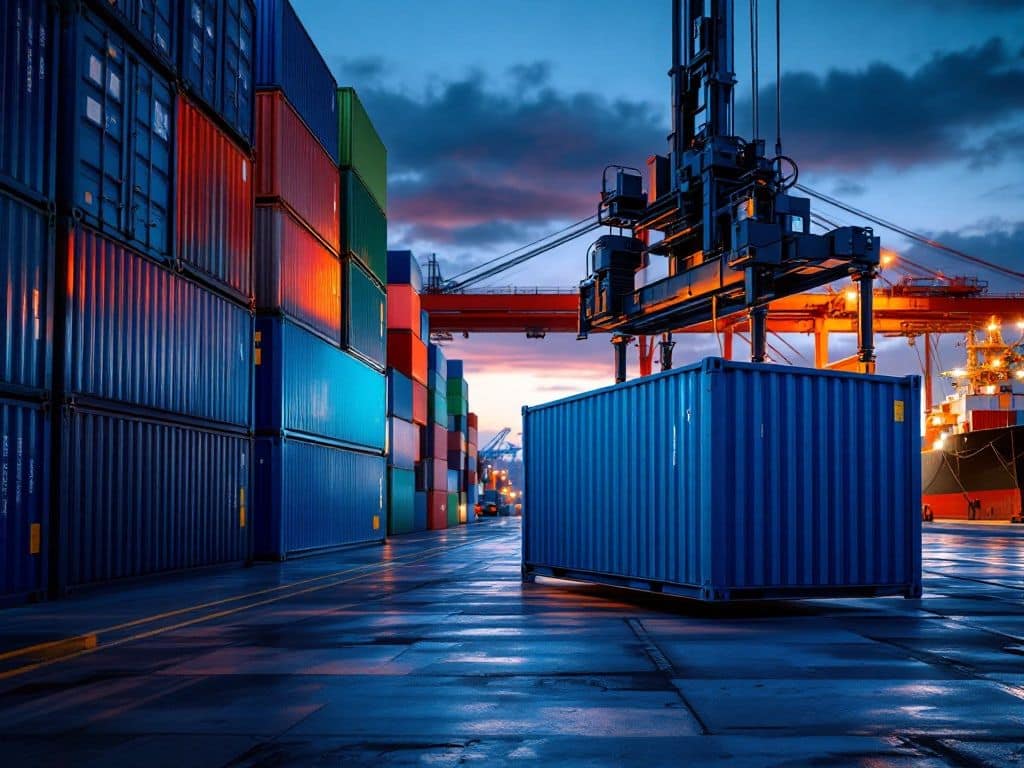

How US-EU Trade Tariffs Are Reshaping Container Flows — and What It Means for Buyers
Written on October 27, 2025
by Gabriel B.
In the following categories: Fresh
When the US imposes tariffs on European goods, the immediate headlines focus on the political dimension. The practical consequence — how container flows between the US and Europe actually change, and what that does to domestic container availability and pricing — gets less attention. This article covers the structural trade route shifts that US-EU tariff policy creates and what buyers sourcing containers for storage or business use need to understand about the downstream effects.
What US-EU Tariffs Actually Target
The tariffs introduced or expanded under Trump's second administration targeted specific European import categories — primarily automobiles, steel and aluminum products, and certain industrial machinery. These are not the product categories that move in standard dry shipping containers alone — automobiles move on roll-on/roll-off vessels, steel moves in bulk carriers and flat racks — but the downstream effect on dry container flows is real.
When US tariffs raise the landed cost of European goods, US importers respond in predictable ways: they front-load inventory before tariff implementation dates, they reduce import volumes on tariffed product lines, and they accelerate sourcing diversification toward non-tariffed origins — primarily Asia and, increasingly, Mexico and Central America under USMCA arrangements.
Each of these responses changes the pattern of container demand on specific trade routes.
How Transatlantic Container Flows Change Under Tariff Pressure
The transatlantic trade lane — primarily Asia-manufactured goods routed through European transshipment hubs, and direct European manufactured goods — is one of the busiest container corridors in the world. US tariffs on European goods create an asymmetry: westbound flows (Europe to US) become more expensive for US importers, while eastbound flows (US exports to Europe) are affected by European retaliatory measures on US goods.
The practical effects on container flows:
- Westbound volume reduction: US importers reduce orders from tariffed European suppliers, meaning fewer containers move from European ports to US East Coast and Gulf ports. This can slightly reduce used container retirement into those regional secondary markets over time, as fewer containers complete trade voyages and exit freight service in those ports.
- Front-loading surges: Before tariff implementation, importers rush goods through. This temporarily spikes westbound container demand, clears port backlogs rapidly, and can briefly tighten used container availability in affected East Coast markets before the longer-term volume reduction takes hold.
- Asia-US route intensification: As importers shift sourcing from Europe to Asia on non-tariffed product categories, transpacific container demand increases. This benefits West Coast ports and increases the flow of containers completing transpacific voyages — which is a positive supply signal for secondary container markets in West Coast and Midwest regions over a 12–24 month horizon.
- Mexico and nearshore routing growth: USMCA-eligible goods from Mexico and Central America move by truck and rail rather than ocean container — this shift does not directly affect the ocean container market but does increase demand for domestic container storage at US manufacturing and distribution facilities near the southern border.
The Front-Loading Effect: What Happened in Early 2025
The pattern of tariff front-loading is well-documented from prior US trade policy cycles — it occurred ahead of the 2018–2019 China tariff implementations and repeated in early 2025 ahead of the EU tariff announcements. Importers in affected categories ordered heavily in advance, compressing several months of normal import volume into a shorter window.
For container buyers, front-loading creates a specific short-term dynamic: ports get very busy, throughput strains terminal capacity, freight rates on affected routes spike temporarily, and then volume drops sharply after the rush ends. The spike-then-drop pattern in freight rates affects new one-trip container pricing with a lag — rates that spike in Q1 affect new container purchase prices in Q2 and Q3 as the cost flows through from manufacturers to buyers.
By the time a typical buyer is seeing price increases from a front-loading event, the underlying freight rate spike has often already peaked and begun correcting. This is relevant for buyers trying to time a new container purchase — the visible price increase is typically a lagging indicator of a rate event that has already turned.
What This Means for Domestic Container Buyers
The connection between US-EU tariff policy and what a buyer pays for a container in Ohio or Texas is indirect but real. The clearest mechanisms:
| Tariff Effect | Container Market Impact | Buyer Relevance |
|---|---|---|
| Westbound transatlantic volume reduction | Slightly tighter used container supply at East Coast ports over 12–24 months | Minor — East Coast buyers may see marginally less used inventory over time |
| Front-loading surge before tariff dates | Temporary freight rate spike → new container price lag increase | New one-trip buyers: price increases visible 1–2 quarters after the rate event |
| Asia-US sourcing shift | Higher transpacific container volume → more used container supply at West Coast and Midwest depots | Positive for West Coast and inland buyers over time |
| Nearshore manufacturing growth | Increased demand for on-site container storage at US distribution facilities | Commercial buyers near border states and Sunbelt distribution hubs see stronger demand for containers as storage assets |
| European retaliation on US exports | Reduced eastbound US export container demand | Minimal direct effect on domestic container purchase market |
Tariffs, Nearshoring, and Container Storage Demand
The most durable effect of sustained US-EU tariff policy for container buyers is the nearshoring-driven demand increase for domestic container storage. As US companies build or expand production capacity in Mexico and the US Sunbelt to reduce tariff exposure, they generate demand for on-site storage at manufacturing and distribution facilities.
Container storage is particularly well-suited to this use case: it scales incrementally (one unit at a time), requires no construction, can be placed and operational within days, and can be relocated if facility needs change. The growth in domestic manufacturing investment that tariff policy accelerates is one of the structural drivers of US container purchase demand that operates independently of freight rate cycles.
For buyers in Texas, the Southwest, and the Southeast — regions seeing the most nearshoring-driven industrial activity — container demand is likely to remain strong regardless of where freight rates trend. The manufacturing equipment storage guide covers how industrial buyers approach this use case.
How to Read Tariff News as a Container Buyer
Tariff announcements generate a lot of noise. Most of it is not directly actionable for someone buying a container for storage or business use. A useful filter:
- Tariff on Chinese goods: Most directly relevant. China manufactures the overwhelming majority of ISO shipping containers. US tariffs on Chinese goods that include container manufacturing inputs — steel, components — can directly affect new container purchase prices. Monitor this category specifically.
- Tariff on European goods: Indirectly relevant through freight rate effects and trade route shifts. The price effect on domestic container purchases is real but lagged and moderate compared to the direct China tariff channel.
- Retaliatory tariffs on US exports: Minimal direct effect on domestic container purchase prices. Affects exporters, not buyers sourcing containers for domestic storage.
- Front-loading news: If business media is reporting a surge in imports ahead of a tariff implementation date, expect a freight rate spike to follow and a potential lag increase in new one-trip container pricing. If you are flexible on timing, ordering before the front-loading surge completes is typically better than ordering during the rate peak.
Current Container Availability
YES Containers maintains depot inventory across 40+ locations nationwide. Pricing reflects your actual delivery ZIP code. Current availability for buyers in markets most affected by US-EU trade route shifts:
- East Coast buyers: Newark, NJ and Virginia depot coverage
- Southeast buyers: Georgia depot coverage
- Gulf Coast buyers: Houston depot coverage
- All sizes and grades: full product catalog
Call 1-800-223-4755 to confirm current inventory at the depot nearest to your delivery location.
Frequently Asked Questions
Do US tariffs on European goods directly raise container purchase prices?
Indirectly and with a lag. The most direct tariff effect on container purchase prices comes from tariffs on Chinese goods — China manufactures most ISO shipping containers. EU tariffs affect container pricing through freight rate changes on transatlantic routes and through trade flow shifts that alter which ports receive the most container volume. The effect is real but slower-moving than the China tariff channel.
Should I buy a container now before tariffs push prices higher?
The front-loading dynamic means the most visible price increases typically occur after the freight rate spike has already peaked. If prices are already reflecting tariff anxiety in your market, the correction may be closer than the further increase. The better framing: if you have an active storage or operational need, the ongoing cost of your alternative (rented storage, warehouse space) almost always justifies buying based on need rather than tariff timing speculation.
How does nearshoring affect container availability near me?
Nearshoring increases demand for container storage at US manufacturing and distribution facilities, particularly in Texas, Arizona, the Carolinas, and Tennessee — the states seeing the most inbound manufacturing investment. In those markets, container purchase demand is structurally stronger than in markets that are not nearshoring destinations. This is a demand-side pressure that operates independently of freight rate cycles.
Which container grade makes most sense during trade uncertainty?
For storage applications where the container will stay in one place for several years, the grade decision is driven by your budget and climate, not by tariff policy. If new one-trip pricing is elevated due to freight rate effects from tariff front-loading, a WWT or CW used container delivers the same storage function at a lower entry cost and with pricing that is less sensitive to ocean freight rate cycles. The WWT vs CW decision guide covers the grade selection framework.