

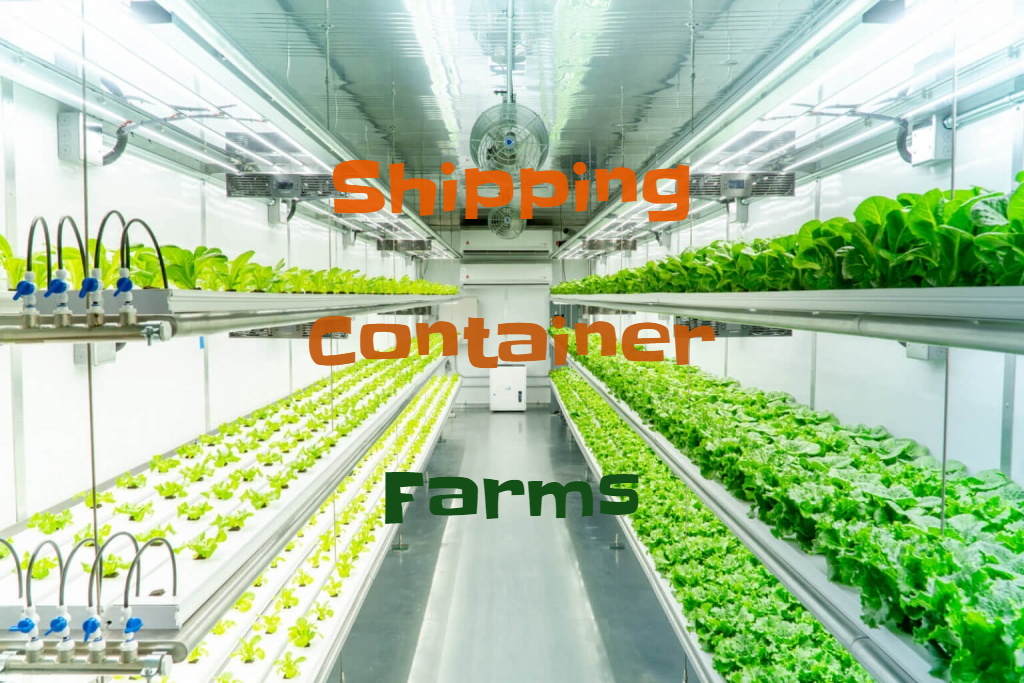

Hydroponic Container Farms: The Case for Decentralized Agriculture
Written on November 9, 2022
by Anna Nichita
In the following categories: How To, News, Shipping Container Maintenance & Fabrication
The shipping container's original job was moving freight across oceans. Its second career has been storage — on job sites, farms, and commercial properties across the US. Its third, and perhaps most unexpected, career is growing food. Hydroponic container farms are turning standard 20ft and 40ft steel boxes into controlled-environment growing systems that produce fresh vegetables year-round, anywhere from city rooftops to remote rural properties.
This is not a fringe experiment. Companies like Square Roots — co-founded by Kimbal Musk — have built entire operations around container-based urban farming, compressing what would otherwise require acres of farmland into a single shipping container footprint. The question worth exploring is why this works, and whether it represents a durable shift in how food gets grown and distributed.
The Problem with Centralized Food Systems
The US food system has consolidated dramatically over the past century. The number of operating farms has dropped by roughly 70% since the mid-20th century, while the average meal now travels over 1,500 miles from farm to plate. That distance creates fragility — when a single growing region faces drought, disease, or logistics disruption, the effects ripple through national supply chains immediately.
Small farms continue to disappear not because the demand for local food is declining — it is increasing — but because the economics of competing with industrial-scale operations are difficult for smaller producers. Labor costs, land costs, and the uncertainty of weather-dependent outdoor farming make it hard to build a viable small food business on traditional agricultural models.
Hydroponic container farming addresses several of these structural problems simultaneously: it eliminates weather dependency, dramatically reduces the land footprint required for meaningful food production, and makes the operation portable and scalable in ways that conventional farming cannot be.
What Is a Hydroponic Container Farm?
A hydroponic container farm is a climate-controlled growing environment built inside a shipping container — typically a 20ft or 40ft unit. Instead of soil, plants grow in nutrient-rich water solutions or inert growing media like rockwool or perlite. LED lighting replaces sunlight. Automated systems regulate temperature, humidity, CO₂ levels, nutrient delivery, and irrigation cycles.
The result is a growing environment that is entirely independent of outdoor conditions. A container farm in Minnesota produces the same yield in January as it does in July. A container farm in Arizona grows lettuce during summer temperatures that would be impossible for outdoor cultivation. A container farm on a New York City rooftop grows fresh herbs for the restaurant below it.
The container provides the structure — weatherproof, secure, standardized — and the hydroponic system provides the growing environment inside it. Together they create a self-contained food production unit that can be placed almost anywhere and moved if needed.
Key Advantages of Container-Based Hydroponic Farming
Water Efficiency
Hydroponic systems use dramatically less water than conventional agriculture. Because water is recirculated through the system rather than absorbed into soil and evaporated, consumption runs as low as 5–10% of what comparable outdoor crop production would require. For buyers in drought-prone regions — the Southwest, parts of the Mountain West — this is one of the most compelling practical advantages of the model.
Year-Round Production
Outdoor farming is inherently seasonal. Container farming is not. By controlling the growing environment entirely, operators can run continuous grow cycles without planting seasons, frost risk, or summer heat shutdowns. For buyers running restaurant supply operations or selling through farmers markets, continuous production capability changes the business model fundamentally.
No Pesticides Required
A sealed container growing environment eliminates the pest vectors that conventional and greenhouse farming must manage with chemical applications. Container farms operate without pesticides as a practical matter, not just as an aspirational goal — there are no insects, no soil-borne pathogens, and no airborne contamination if the system is properly sealed and filtered.
Compact Footprint, High Yield
Vertical growing within a container — stacking growing trays in multiple layers — multiplies the effective growing area relative to the floor footprint. A 20ft container with four layers of growing racks has the equivalent growing surface of a much larger single-story growing operation. Companies like Square Roots have demonstrated that one container can produce yields equivalent to multiple acres of field-grown equivalent crops on a per-calorie basis for appropriate crop types.
Portability and Scalability
A container farm can be relocated using the same logistics infrastructure that moves any shipping container — tilt-bed truck, flatbed, rail, or ship. If a business model changes, the farm moves with it. If demand grows, additional containers can be added to the operation one unit at a time. This scalability is genuinely different from greenhouse or warehouse growing operations, which require significant fixed infrastructure investment to expand.
What Grows Well in Container Farms
Not all crops are equally suited to container hydroponic production. The economics work best for high-value, fast-cycling crops with strong local market demand.
| Crop Category | Examples | Container Farming Suitability |
|---|---|---|
| Leafy greens | Lettuce, spinach, arugula, kale | Excellent — fast cycle, high density, consistent demand |
| Herbs | Basil, cilantro, mint, parsley | Excellent — high value per square foot, strong restaurant demand |
| Microgreens | Sunflower, radish, pea shoots | Excellent — fastest cycle, premium pricing |
| Fruiting crops | Tomatoes, peppers, cucumbers, strawberries | Good — slower cycle, requires more vertical space and light intensity |
| Root vegetables | Carrots, radishes, beets | Limited — root crops require deeper growing media, less space-efficient |
The Real Cost Picture
Container hydroponic farming is not cheap to start. A fully equipped, commercially automated 20ft container farm from an established provider typically runs $60,000–$120,000 depending on the growing system, automation level, and climate control specification. A 40ft setup scales accordingly. These costs include the container, insulation, LED lighting systems, growing racks, climate control equipment, nutrient delivery systems, and software.
Operating costs include electricity (the primary ongoing expense — LED lighting and climate control draw significant power), water, nutrients, and labor. The economics work when the crops produced command premium local pricing — specialty herbs, organic microgreens, restaurant-direct leafy greens — and when the operation is located close enough to the end buyer to eliminate significant distribution cost.
The container itself is typically the smallest component of the total investment. A used 20ft container suitable for hydroponic conversion costs $2,500–$4,000 depending on grade and region. A new one-trip unit, preferred for conversions because of its clean interior and intact coatings, runs $4,500–$5,500. The growing system built inside it is where the majority of capital goes.
Where This Fits in the Container Ecosystem
YES Containers supplies the container that hydroponic farmers start with — the steel shell that becomes the growing environment after modification. For buyers considering a container farm project, the starting point is a clean, structurally sound unit. New one-trip containers are the preferred choice for hydroponic conversion: the factory-intact interior, sealed floor, and absence of cargo history eliminate the contamination and chemical residue concerns that can affect used units being converted to food production applications.
The used container inspection guide covers what to check for when evaluating a used unit for any food-adjacent application — including floor treatment chemical history, which matters significantly when growing consumable crops. For buyers ready to source a container for a hydroponic project, the product catalog shows current inventory by location, and the team at 1-800-223-4755 can advise on which units and grades are appropriate for conversion use.
Part II of this series covers the practical setup: how to choose and acquire a container for hydroponic use, equipment selection, crop and market planning, and the environmental control systems that make container farming work. Continue reading: Hydroponic Container Farms Part II: How to Get Started.
Frequently Asked Questions
How much does it cost to build a hydroponic container farm?
A fully equipped, commercially automated 20ft container farm from an established provider typically costs $60,000–$120,000, including the growing system, climate control, LED lighting, and software. The container itself is a small portion of that total — a new 20ft one-trip unit suitable for conversion runs $4,500–$5,500. DIY builds using off-the-shelf components can reduce total cost significantly but require more technical expertise to set up and maintain.
What crops grow best in container hydroponic farms?
Leafy greens (lettuce, spinach, arugula), herbs (basil, cilantro, mint), and microgreens are the most economically productive crops for container hydroponic operations because of their fast growth cycles, high yield density, and strong local market demand. Fruiting crops like tomatoes and strawberries work but require more space, more light intensity, and longer grow cycles before harvest.
Can a container farm operate off-grid?
Yes, with appropriate power infrastructure. Solar panels and battery storage can power a container farm, though the electricity demand — primarily from LED lighting and climate control — is substantial. A 20ft farm running LED arrays and HVAC draws 3–8 kW continuously depending on configuration. Off-grid operation is feasible but requires meaningful solar and battery investment beyond the farm itself.
Is a new or used container better for hydroponic conversion?
A new one-trip container is significantly better for any food production application. Used containers may have cargo history involving chemical fumigants, pesticide treatments, or industrial goods that leave residues in the floor and wall linings. For a growing environment where consumable crops are produced, eliminating that contamination risk is worth the premium over a used unit.