



Panama Drought Challenges Global Shipping Routes
Written on September 14, 2025
by Adrian Stan
In the following categories: Container Shipping Industry, News
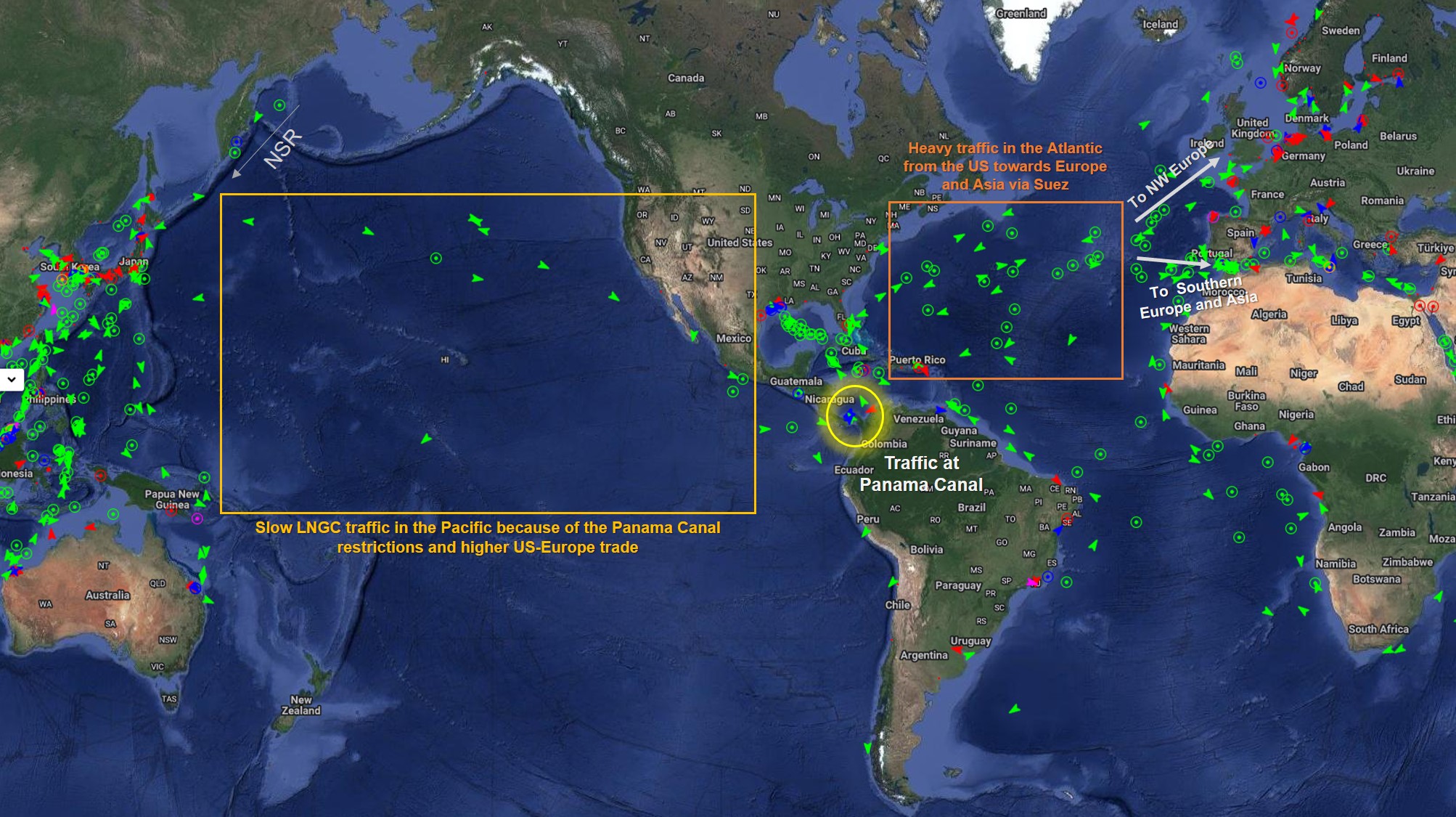
The Panama Canal drought has become one of the most pressing challenges in global shipping for 2025, disrupting trade flows and testing supply chain resilience worldwide. This critical 80-kilometer waterway — connecting the Atlantic and Pacific Oceans — handles over 5% of global maritime trade. However, record-low water levels are forcing vessel restrictions, creating backlogs, and compelling shippers to reroute through longer, costlier alternatives.
Drought Impact on Water Levels
Water levels in the Panama Canal have dropped to their lowest point since 2016, primarily due to prolonged dry seasons and reduced rainfall linked to climate-driven weather patterns. Each vessel transit expels roughly 50 million gallons of water from Gatun Lake — the primary reservoir that feeds the locks. But as rainfall has declined, replenishment has slowed dramatically, placing strain on both canal operations and Panama’s freshwater reserves.
The Panama Canal Authority (ACP) is actively working to conserve water by implementing cargo load limits, draft restrictions, and new operational measures designed to minimize water loss. Despite these efforts, forecasts suggest that Gatun Lake levels will remain below average until late 2025, forcing continued capacity reductions.
Draft Restrictions and Operational Limits
In an effort to protect the country’s freshwater resources, the ACP has reduced vessel draft limits for Neo-Panamax locks to 44.0 feet (down from 45.5 feet). These limits directly affect how much cargo a ship can carry per voyage — meaning that vessels must operate below full capacity.
The restrictions are expected to persist through the upcoming wet season, creating a ripple effect across shipping networks. With vessel capacity reduced, many operators must deploy additional ships or seek alternative routes to maintain throughput.
Reduced Transit Capacity and Growing Congestion
Transit limitations have also been imposed, reducing the usual 23 daily transit slots to just 14, with preference given to larger vessels. This has resulted in severe congestion, with vessel queues peaking at 162 ships in August and average waiting times exceeding 20 days.
As global trade picks up ahead of the 2025 holiday season, congestion is expected to worsen — potentially driving up freight costs even further. According to Drewry’s World Container Index, transit delays have already contributed to a 12% rise in global spot freight rates since January.
Global Shipping Impact
The prolonged drought and operational restrictions are expected to continue for at least the next ten months. This will lead to:
- Reduced fleet efficiency due to lower vessel loads.
- Increased transit times as ships are forced to reroute through the Suez Canal or around the Cape of Good Hope.
- Higher logistics costs due to congestion and longer shipping distances.
While the Suez Canal and African routes offer alternatives, they add significant transit time — often more than 10 days — and higher fuel expenses. As a result, the drought’s effects extend far beyond Panama, impacting supply chains across the Americas, Asia, and Europe.
Sector-Specific Implications
Crude Tankers
Minimal impact has been observed, as only a small percentage of the crude fleet regularly transits the Panama Canal. However, increased traffic on alternative routes may tighten global tanker availability.
U.S. Refined Product Exports
Fuel exports from the U.S. Gulf Coast to Latin America — particularly to Chile, Peru, Ecuador, and El Salvador — are experiencing disruptions. Delays could drive up regional fuel costs and force importers to rely on alternative suppliers.
LNG and LPG Shipping
The Panama Canal is a critical passage for liquefied natural gas (LNG) shipments bound for Asia. While the immediate impact remains moderate, worsening drought conditions or labor disruptions in Australian LNG exports could strain capacity further. Liquefied petroleum gas (LPG) carriers (VLGCs) are already taking longer routes, increasing charter rates but also benefiting owners through higher freight earnings.
Dry Bulk Trade
Smaller dry bulk vessels are seeing increased charter rates due to longer delivery times and congestion. Commodities such as coal, copper, and metal concentrates are among those most affected, especially for exports from Latin America.
Adapting to the Panama Canal Drought
The drought underscores the importance of strategic flexibility in shipping and trade logistics. Companies are now diversifying routes, increasing cargo transshipment capacity in Mexico and Colombia, and securing additional storage options to buffer against delivery delays.
At YES Containers, we closely track the evolving conditions impacting international trade. Our ExpressShip delivery service ensures that businesses can still access high-quality containers for storage and transport, even during periods of global shipping disruption.
Our nationwide network and flexible payment options help offset logistical challenges caused by global events like the Panama Canal drought. Whether you’re shipping goods domestically or internationally, our team ensures seamless container access across all major U.S. hubs.
Looking Ahead
With climate patterns expected to remain volatile, the Panama Canal drought serves as a reminder of how environmental factors can reshape global logistics. Stakeholders across the supply chain must prioritize resilience, route diversification, and infrastructure investment to mitigate similar disruptions in the future.
To learn more about how evolving shipping conditions may affect your logistics or storage plans, call 1-800-223-4755 or request a quote online.
Related Resources
- Global Shipping Trends 2024: Resilience Amidst Geopolitical Shifts
- 2025 Container Market Outlook: Trade War Impact & Price Trends
- Global Shipping Heats Up: Spot Rates Surge as Demand Outpaces Capacity
- Container Shipping Tariffs 2025: Crisis Impact Analysis
External References
- Panama Canal Authority (ACP)
- The Maritime Executive – Panama Canal Coverage
- Drewry Supply Chain Advisors – Freight Index
- NASA Earth Observatory – Drought Analysis
The Panama Canal drought of 2025 is a pivotal moment for global shipping, testing supply chains and driving innovation in logistics management. With adaptability and proactive planning, the industry can continue moving forward — even through uncharted waters.
