


How Panama Canal Droughts and Restrictions Affect Global Shipping Routes and Container Costs
Written on September 14, 2025
by Adrian Stan
In the following categories: Container Shipping Industry, News
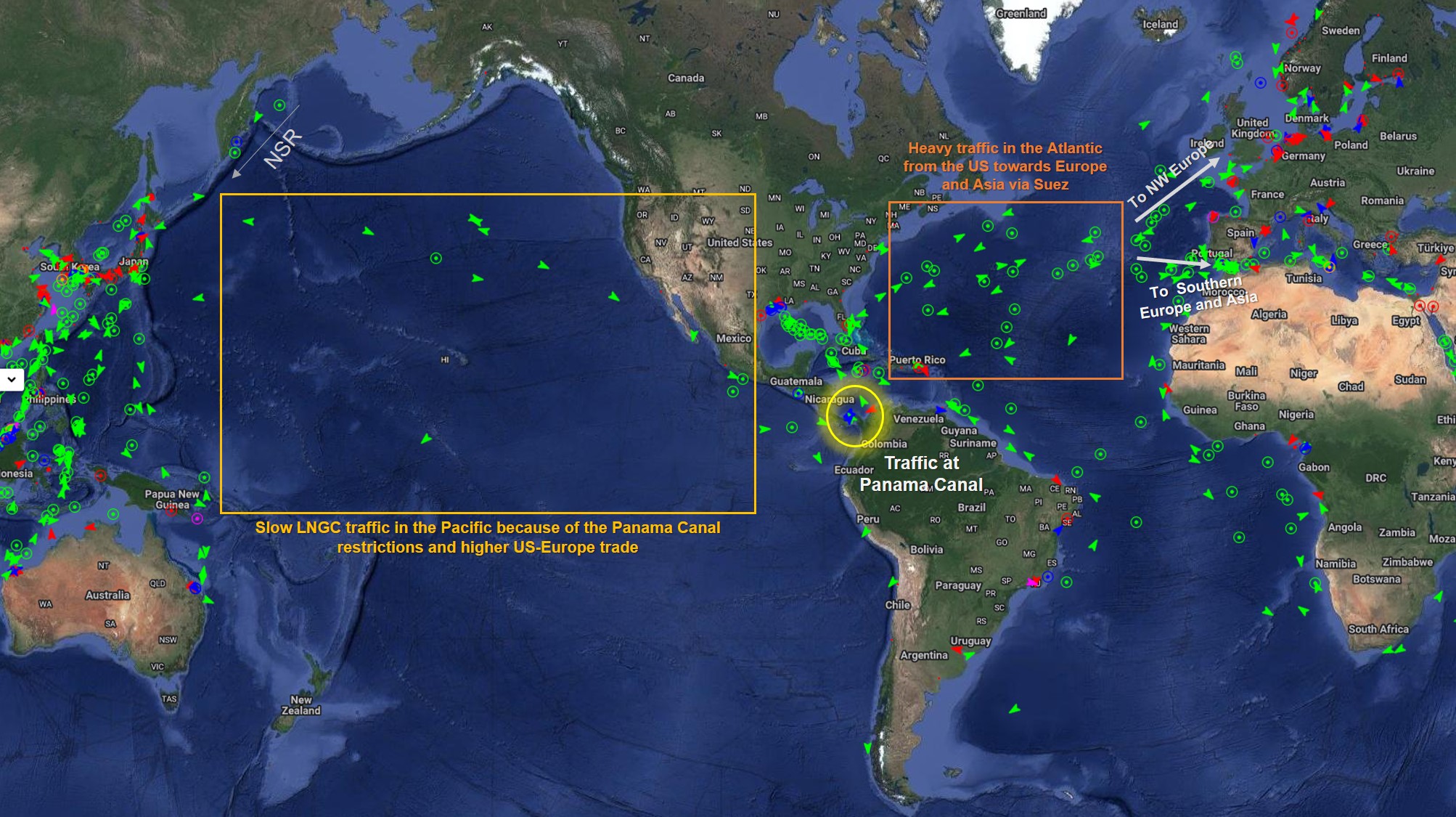
The Panama Canal is an 80-kilometer waterway connecting the Atlantic and Pacific Oceans that handles over 5% of global maritime trade. When water levels in Gatun Lake — the freshwater reservoir that feeds the canal's locks — drop below operational thresholds, the Canal Authority responds with draft restrictions, reduced daily transit slots, and cargo load limits. Each of these measures creates a cascade of effects that reach well beyond Panama, affecting freight rates, vessel routing, and ultimately the prices US buyers pay for shipping containers.
This article explains how the Panama Canal drought mechanism works, what specific restrictions get imposed, and how those restrictions translate into effects that US container buyers actually feel.
Why Drought Affects Canal Operations
Unlike most major shipping lanes, the Panama Canal is not a sea-level channel — it uses a lock system that lifts and lowers vessels 85 feet through a series of chambers. Each vessel transit expels roughly 50 million gallons of water from Gatun Lake. In normal rainfall years, the lake replenishes faster than it is drawn down. During drought periods driven by El Niño and climate-related precipitation changes, the replenishment rate drops below the draw-down rate.
The Panama Canal Authority (ACP) manages this constraint by imposing draft restrictions — limits on how deep a vessel can sit in the water, which directly limits how much cargo it can carry. A vessel operating at a reduced draft carries less cargo per trip, which means more trips are needed to move the same volume, which means more water consumption per ton of cargo moved. The ACP also reduces the number of daily transit slots to slow the rate of water use.
The 2023–2024 drought was one of the most severe on record. Gatun Lake levels dropped to their lowest point in decades, forcing the ACP to cut daily transits from the normal 35–36 down to 14 at the worst point, and to reduce draft limits from 45.5 feet to 44.0 feet for Neo-Panamax vessels. Wait times for vessels queuing for transit stretched beyond 20 days at the peak. Water levels have since partially recovered, but the vulnerability to future drought events remains and is a recurring variable in Panama Canal operations.
How Restrictions Translate to Shipping Disruptions
The direct effects of draft restrictions and reduced transit slots:
- Reduced cargo per vessel: Ships operating at a lower draft carry 10–20% less cargo per trip depending on vessel type. The same cargo volume now requires more ship-calls, which consumes more slots in the reduced daily allocation.
- Extended wait times: More ships waiting for fewer slots means anchor queues build. Vessel operators pay demurrage while waiting and face schedule disruption that ripples through their entire service network.
- Rerouting decisions: When wait times become prohibitive, shipping lines reroute vessels through the Suez Canal (adding 10+ days to US East Coast to Asia voyages) or around the Cape of Good Hope (adding 2+ weeks to some routes). Both alternatives add fuel cost and vessel time.
- Charter rate increases: Longer voyages and rerouting reduce effective vessel capacity on affected trade lanes, tightening available space and pushing charter rates and spot freight rates higher.
Which Trade Lanes Are Most Affected
The Panama Canal's strategic value is different for different trade flows. The drought effects are not uniform across all shipping.
US East Coast to Asia
Container traffic from East Coast ports to Asia — and the reverse — is the trade lane most directly affected by Panama Canal restrictions. Shippers moving goods between the US East Coast and Asian manufacturing centers either wait through the queue, reroute via Suez, or shift to West Coast port alternatives (which then affects transpacific routing and inland logistics). All three options add cost or time.
US Gulf Coast Exports
LNG, refined petroleum products, and agricultural commodities from the Gulf Coast moving to Latin American and Asian markets depend heavily on Panama Canal access. Draft restrictions directly limit how much cargo energy tankers and bulk carriers can load per voyage, affecting volume economics for Gulf exporters.
Latin American Commodity Trade
Copper, coal, and metal concentrates from South American producers to Asian markets use the Canal as a primary route. Smaller dry bulk vessels see the most direct disruption, with longer routing and higher charter costs flowing through to commodity pricing.
US West Coast Importers
Interestingly, Canal restrictions that force traffic away from the Panama route can increase volumes at West Coast ports as cargo reroutes through LA/Long Beach or Tacoma to reach the US East Coast by rail rather than by sea through Panama. This benefits West Coast port capacity utilization but shifts congestion dynamics.
How Panama Canal Disruptions Affect US Container Buyers
The connection between Panama Canal drought conditions and what a buyer pays for a storage or commercial container in the United States runs through two mechanisms — the same channels that apply to Red Sea disruptions and other freight market events.
New One-Trip Container Pricing
New containers are manufactured in Asia and shipped to US ports on ocean freight voyages. When freight rates rise due to Panama Canal restrictions — fewer slots, rerouted vessels, higher charter costs — the landed cost of shipping a new container from a Chinese factory to a US depot increases. Sellers of new one-trip containers adjust pricing accordingly, with the effect typically visible 4–8 weeks after a sustained freight rate spike.
The Panama Canal drought of 2023–2024 contributed to the broader freight rate elevation that pushed new one-trip container prices higher through 2024. As water levels recover and restrictions ease, freight rates on affected lanes tend to normalize, and new container pricing follows with a lag.
West Coast vs. East Coast Buyer Impact
West Coast buyers sourcing from transpacific routes were somewhat insulated from the Panama Canal drought's direct effects — transpacific routing does not use the Canal. East Coast buyers sourcing containers that moved through Canal routes experienced more direct pricing pressure. This geographic differentiation is a useful lens for any buyer trying to understand why container prices in their region may be moving differently from national averages during a Canal disruption event.
Buyer Strategies During Canal Disruptions
For buyers with timing flexibility, understanding where the freight rate cycle is in relation to a Canal disruption can help optimize purchase timing. Several practical points:
- Used containers are less sensitive than new ones. Regional supply and demand drives used container pricing more than global freight events. Buyers with flexibility to choose a used WWT unit absorb less market volatility than buyers committed to new one-trip units during a freight rate spike.
- East Coast buyers feel Canal effects more directly. If Canal restrictions are driving freight rate increases, the effect is more pronounced for buyers on the East Coast sourcing units that moved through Canal routes than for West Coast buyers on transpacific supply chains.
- Sourcing from the nearest depot reduces exposure. A container already sitting in a US depot is not affected by ongoing freight market volatility. Buying from existing domestic inventory rather than waiting for an inbound shipment eliminates freight timing risk entirely.
- Rate spikes are lagged indicators. By the time visible new container price increases appear in listings, the underlying freight rate event has often already peaked. Waiting for prices to fall further after a visible spike frequently means waiting longer than the correction actually takes.
The Broader Climate Pattern
The 2023–2024 drought was severe, but drought conditions affecting the Panama Canal are not a one-time event. The Isthmus of Panama is vulnerable to El Niño-driven dry seasons, and climate projections suggest that precipitation variability in the region will increase over time. The ACP has initiated water conservation infrastructure projects and is studying additional freshwater storage capacity, but these are long-term projects.
For shipping lines, Canal vulnerability is now a standard variable in route planning rather than a periodic surprise. For US container buyers, understanding that Canal disruptions are a recurring rather than exceptional event helps calibrate how much weight to give them in purchase timing decisions — meaningful during active disruptions, but not a reason to indefinitely defer a purchase that has an active need behind it.
Browse current container inventory at yescontainers.com/products. For buyers on the East Coast, current depot coverage includes:
Call 1-800-223-4755 to discuss current availability and delivered pricing for your location. Pay on Delivery is available for buyers who want to inspect before finalizing payment.
Frequently Asked Questions
How does the Panama Canal drought affect shipping container prices?
Indirectly, through freight rate increases. When Canal restrictions reduce throughput and force rerouting, freight rates on affected trade lanes rise. Higher freight rates increase the landed cost of new one-trip containers shipped from Asian manufacturers to US ports, which pushes new container purchase prices higher with a 4–8 week lag. Used container pricing is less directly affected, driven more by regional US supply and demand than by global freight rate movements.
How does the ACP manage water levels during drought?
The Panama Canal Authority responds to low Gatun Lake levels by reducing vessel draft limits (limiting how much cargo ships can carry), reducing the number of daily transit slots (limiting total water use per day), and implementing water-saving measures in the lock chambers. These restrictions continue until lake levels recover sufficiently to resume normal operations. Recovery depends on rainfall in the Panama watershed, which is influenced by El Niño/La Niña cycles and broader climate patterns.
Should I delay buying a container because of Panama Canal disruptions?
For most buyers, no. If you have an active storage or operational need, the ongoing cost of the alternative — rented storage, warehouse space, delayed operations — almost always exceeds any potential price savings from waiting. Used container prices are largely insulated from Canal disruptions. New container prices do move with freight markets, but the lag between a freight rate peak and visible price relief means waiting rarely achieves meaningful savings relative to the carrying cost of delayed action.
Which US buyers are most affected by Panama Canal restrictions?
East Coast buyers sourcing new one-trip containers that move through Canal routes are most directly affected. West Coast buyers on transpacific supply chains are less directly impacted by Canal disruptions. Buyers of used containers from domestic depot inventory are the least affected, as their pricing reflects regional supply and demand more than global freight events.