


Shipping Container Anatomy and Configurations
Written on October 27, 2022
by Anna Nichita
In the following categories: Shipping Container Maintenance & Fabrication
Shipping containers were originally invented for transporting goods over the ocean around 1956 — built to be sturdy, durable, and able to withstand harsh wind, water, and the constant stress of ocean freight. Made from Corten steel, these seemingly simple structures have a lot of intricate, purpose-built attributes that make them equally valuable for land transport, on-site storage, and building projects.
Containers share a basic structure with most buildings — walls, a floor, and a roof — but they're engineered to hold their own weight, the weight of their contents, and the weight of multiple containers stacked on top. You can also read more about how shipping containers are made in our step-by-step guide.
YES Containers offers 20ft and 40ft shipping containers for sale and rent to own — delivered nationwide. Contact us directly for pricing and availability.
A standard shipping container breaks down into four main structural parts and several key components:
1 — Floors
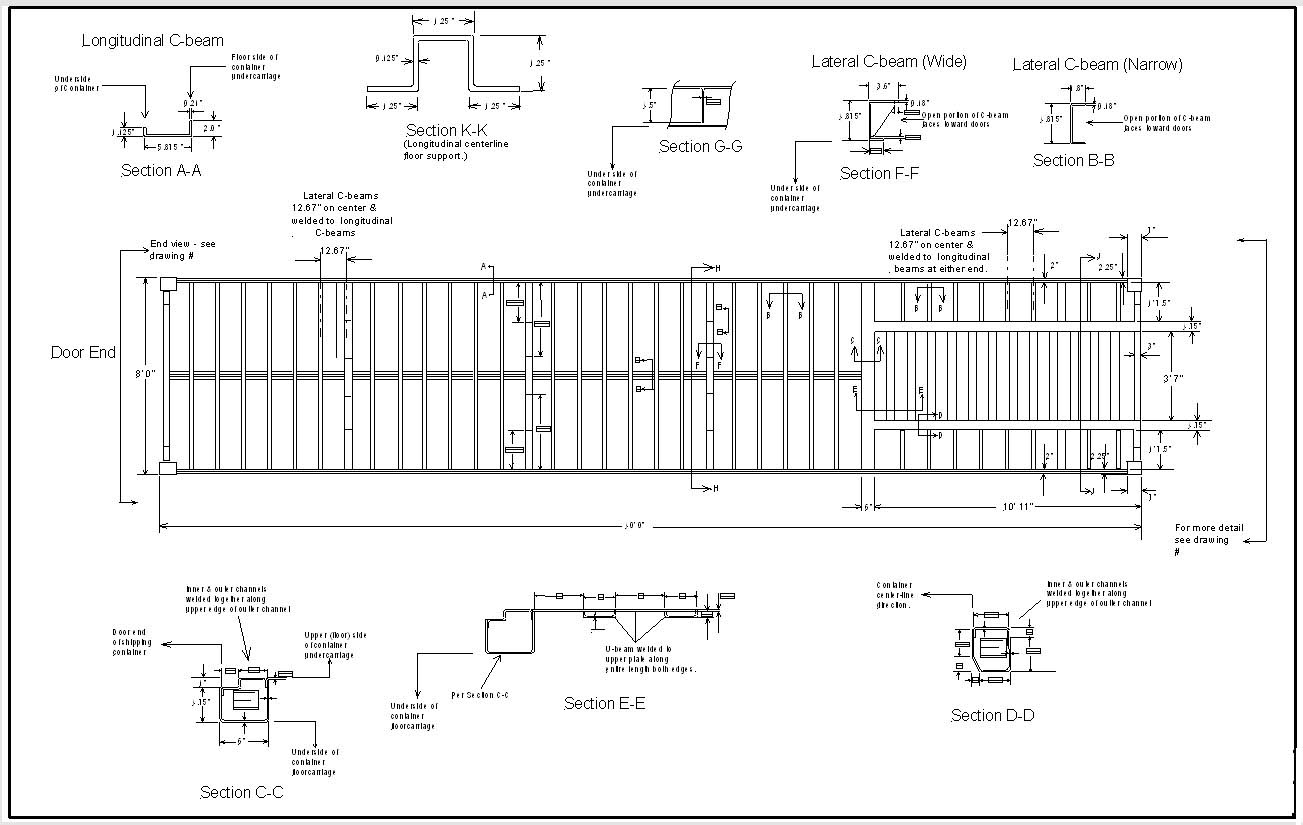
Most container floors consist of 1⅛" treated marine-grade plywood laid over steel cross-members spaced 11" apart. The floor is engineered to handle extreme loads — a standard 20ft container weighs around 5,000 lbs yet can carry a payload of up to 62,000 lbs. Even a small forklift can drive in and out without damaging the floor. All modern containers include forklift pockets (FLP) beneath the floor for easier handling and loading onto trucks.
2 — Walls
Container walls are made from 14-gauge corrugated Corten steel sheets welded onto the container's structural frame. They are not load-bearing and can be modified — cut for windows, doors, or pass-throughs. The corrugated profile adds rigidity and helps the walls absorb impact from adjacent containers in rough seas.

3 — Roof
The roof takes the most punishment during a container's active life — exposed to the elements and bearing the weight of stacked units above. It's fabricated from corrugated Corten steel sheets, welded to the frame for stability, and engineered to support stacking loads. One thing to watch on delivery inspection: the roof is the most vulnerable area for pitting and bubble rust, especially on containers that have been dropped during stacking.

4 — Doors
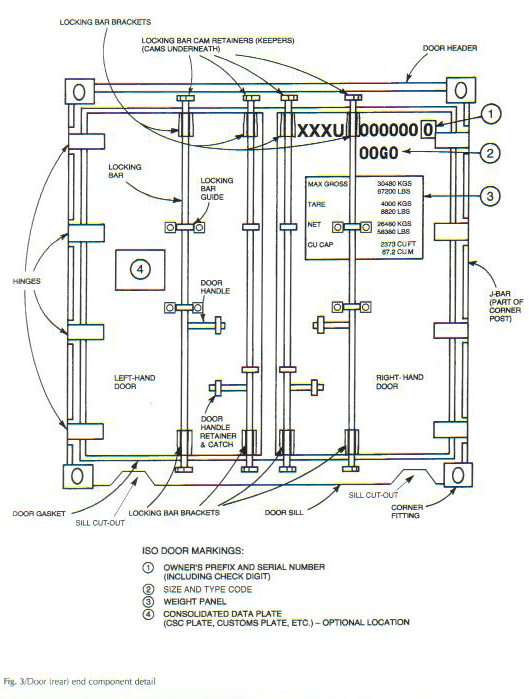
Standard container doors open 270 degrees for full access and easy forklift loading. Made from heavy-gauge steel with lock rods, cam keepers, and rubber seals, they provide a weathertight closure. Some containers have doors on both ends — these are called double-door containers and are popular for drive-through loading setups. If you're buying a used 20ft container, always check door seal condition and hinge integrity on arrival.
Other Key Components
A — Corner Castings / Fittings
The eight corner castings are the container's primary lift and stack points. Cranes, twist locks, and spreader bars all interface here. They're standardized globally under ISO spec.

B — Top and Bottom Rails / Frame
The frame runs along all four top and bottom edges, tying the corner posts and panels into a rigid box. This is what gives containers their stacking strength and prevents any bowing under load.

C — Air Vents
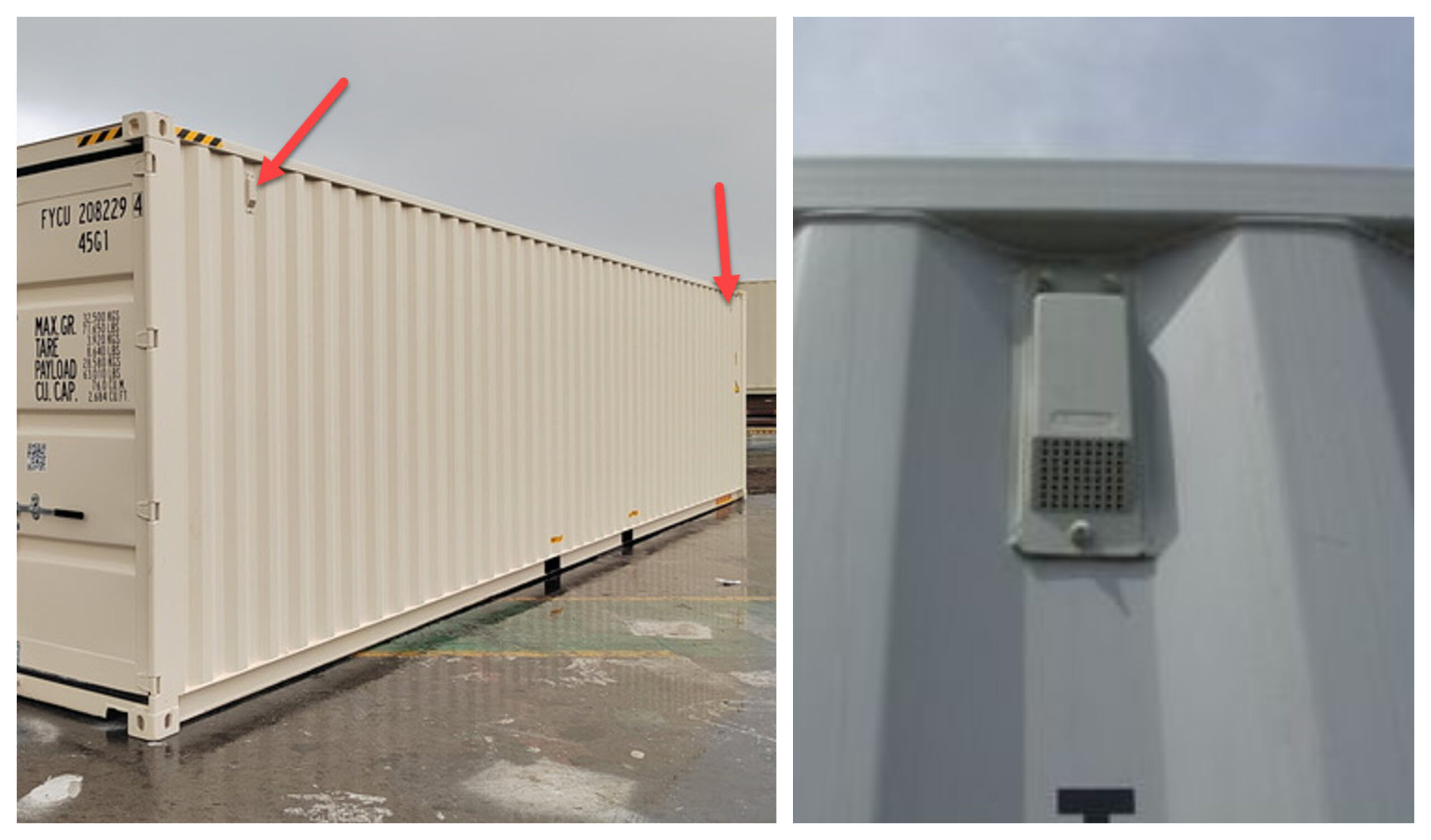
Containers come with two or more passive vents to allow minimal airflow and prevent internal condensation — commonly called "container sweat." Important for anyone using a container for on-site storage, especially in humid climates.
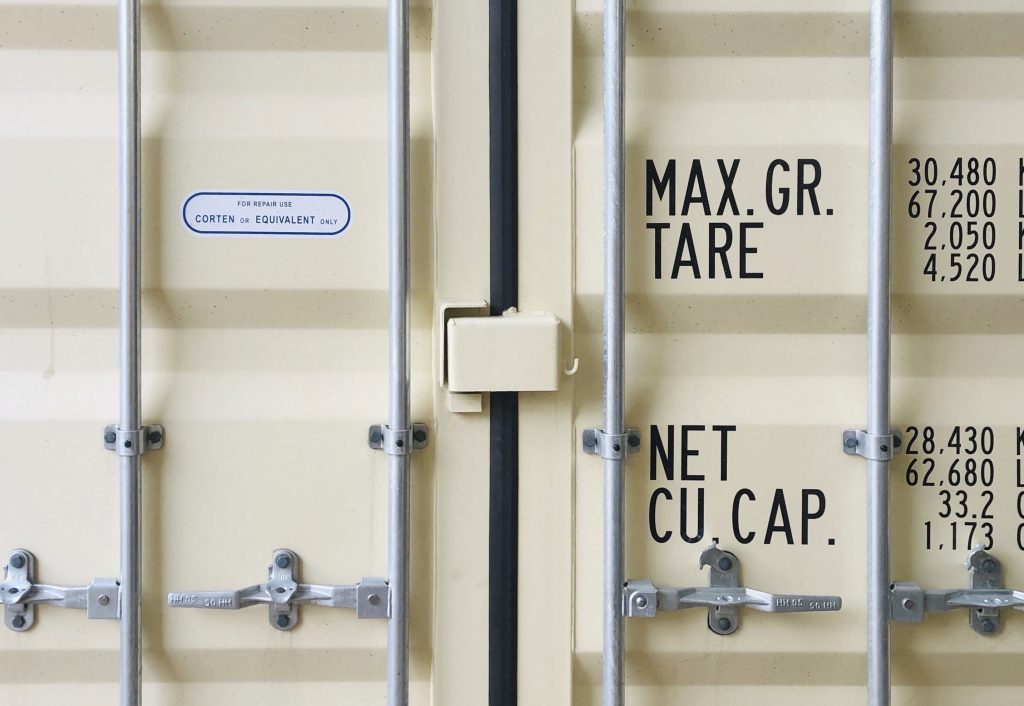
D — Lock Box (LB)
Most new one-trip containers include a welded steel lock box over the door handle, which adds a second layer of security for an external padlock. Used containers typically do not have lock boxes unless added aftermarket.
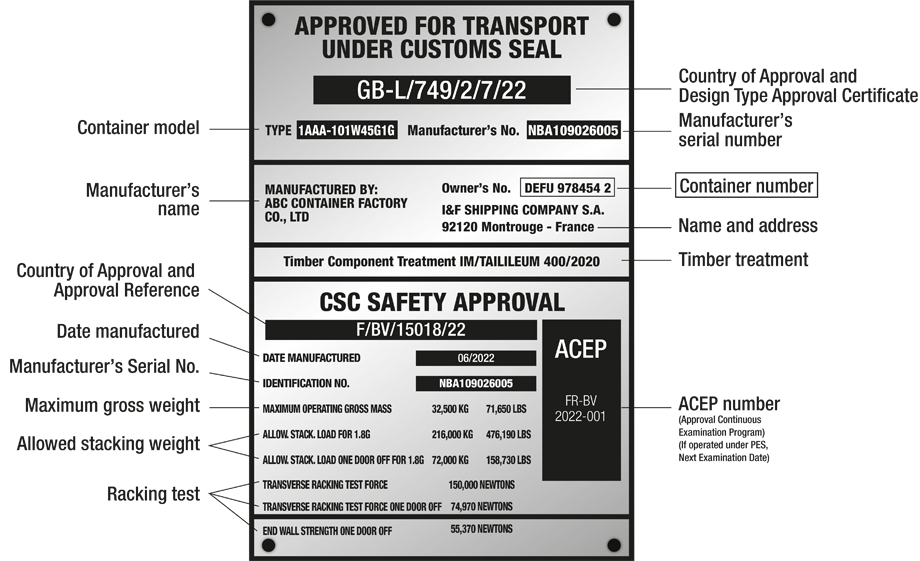
E — CSC Plate
Every container must carry a CSC (Container Safety Convention) plate on the left door. It lists owner details, technical data, and ACEP (Approved Continuous Examination Program) information. Active containers must pass depot examination every 30 months. For containers being imported or shipped internationally, a valid CSC plate is mandatory — see our seaworthy certification service for more detail.
G — Forklift Pockets (FLP)
All 20ft containers have forklift pockets built into the base. Most used 40ft containers do not — worth confirming before delivery if you're planning to reposition with a forklift on-site.

H — Lock Bars
Each door panel is fitted with two vertical lock bars (four total), each of which can be individually padlocked for maximum security.

I — Container Number
Every container carries a unique ISO-assigned identifier — four letters and seven numbers displayed on the top right of the door. The first three letters identify the owner. This number tracks the unit internationally across ports, depots, and carriers.

Now that you know exactly what you're looking at when a container arrives, you'll be better equipped to inspect it on delivery. Check our container inspection guide for a full delivery checklist, or browse our available 20ft and 40ft containers if you're ready to order.
Ready to order a shipping container?
YES Containers supplies new and used 20ft and 40ft containers nationwide with direct-to-site container delivery and a pay-on-delivery option on qualifying orders. Call (302) 596-8809 or get a quote online.
