

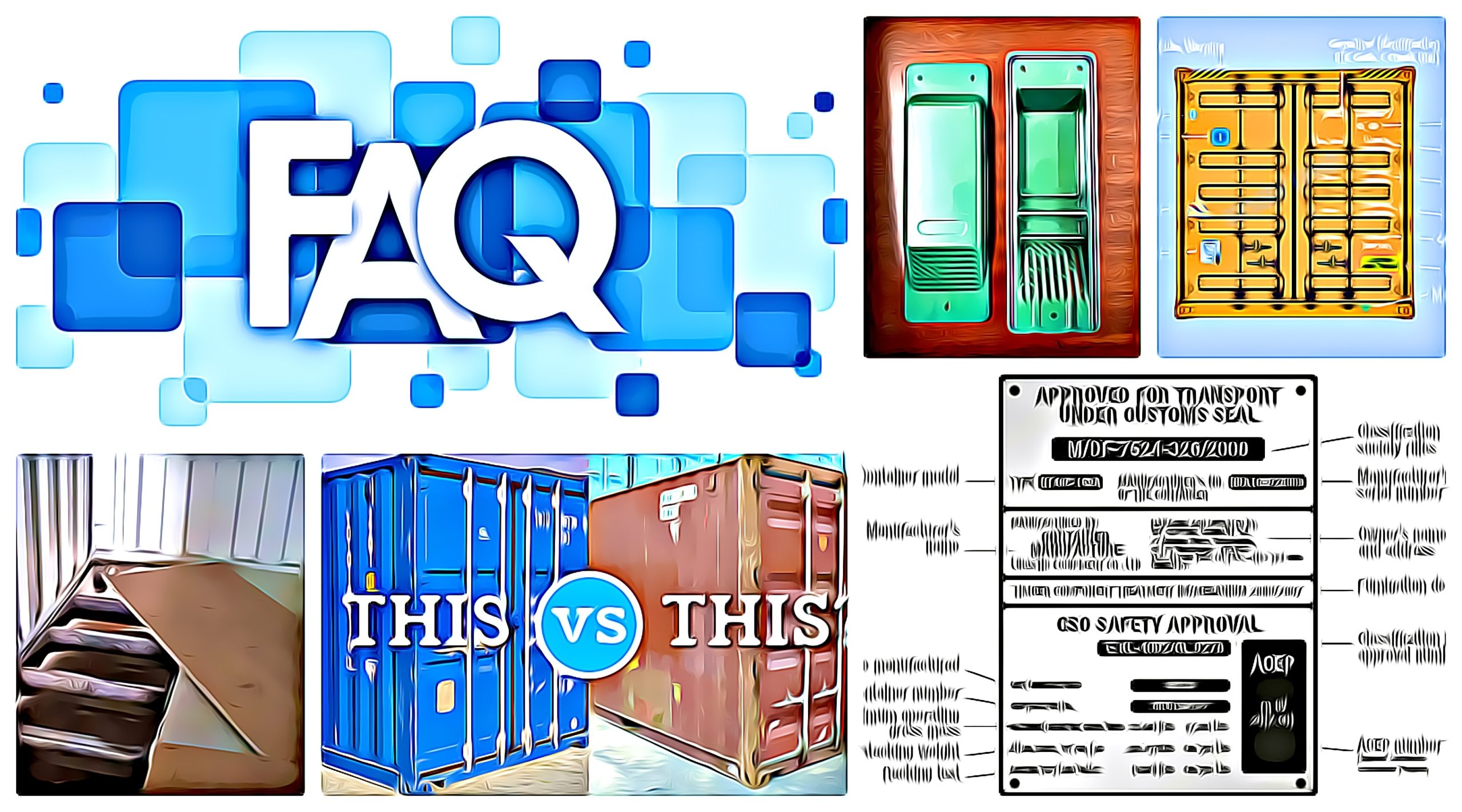

Shipping Container FAQs: Top Questions Answered – Part 2
Written on March 15, 2025
by Anna Nichita
In the following categories: Container Shipping Industry, FAQ
Whether you're new to buying a shipping container or planning your next project, this guide answers some of the most common questions about container standards, materials, and certifications. Picking up where we left off in Part 1, here are the next five FAQs every buyer should know before purchasing a cargo box, sea can, or storage unit.
6. What Does ISO Container Mean — and What Are Its Other Names?
An ISO container is an international intermodal freight unit built to the standards set by the International Organization for Standardization (ISO). These standards ensure containers can be safely stacked, handled, and transported by ship, truck, or train anywhere in the world. Capacity is often measured in twenty-foot equivalent units (TEUs).
All ISO containers are engineered to endure harsh weather and heavy loads — from saltwater exposure on cargo ships to crane lifts in port terminals. They come in standard sizes, guaranteeing uniform compatibility across global logistics networks.
Common terms used for ISO containers include:
- Conex box
- Shipping container
- Storage container
- Sea can
- Ocean crate
- Cargo box
All these refer to the same durable, steel-built storage and transport unit designed for intermodal use.
7. What Are Shipping Container Floors Made Of?
One of the top shipping container FAQs relates to flooring. Most container floors are made from 1-1/8” (or 5/4”) thick marine-grade plywood, reinforced with steel cross members underneath. The wood is typically pressure-treated tropical hardwood like keruing, apitong, or bamboo — chosen for strength and moisture resistance.
Specialized containers, such as insulated or refrigerated units, may have aluminum or stainless-steel floors instead of plywood. These are ideal for temperature-sensitive goods but are less common for general storage use. Learn more about container materials and options in our product catalog.
8. Do You Need a Permit for a Shipping Container?
In most cases, no formal permit is required to place a shipping container on private property, but local zoning laws can vary widely. Before ordering, it’s always wise to check with your city, county, or homeowner’s association. Some areas may restrict container placement for aesthetic or safety reasons.
If you’re renting, landlords may also impose their own conditions. Always confirm before delivery to avoid unnecessary pickup or cancellation fees. For more design-related guidance, see this American Institute of Architects article on modular design.
9. Do Shipping Containers Have Vents?
Yes — most modern containers include ventilation slots near the top sidewalls to reduce humidity buildup. These vents help regulate airflow and prevent condensation, which can cause corrosion or mildew. However, in very cold or wet environments, excess humidity can still lead to minor condensation, so periodic checks are recommended.
If you’re using your container for long-term storage, ensure the vents remain clear of dust and debris. You can also install additional ventilation or insulation upgrades through our container customization options.
10. What Are Shipping Container Grades and Certifications?
Container grading systems describe condition, quality, and suitability for specific uses. While these are not global standards, they provide helpful benchmarks when choosing between used, refurbished, or new units.
- One-Trip (New) Container: Used once to ship goods internationally, then sold domestically. Excellent condition with minimal wear.
- Cargo Worthy (CW): Certified by a marine surveyor for ongoing cargo use. Suitable for international transport and resale.
- Wind and Water Tight (WWT): Fully sealed against the elements. Ideal for on-site storage or non-cargo applications.
- Premium or IICL Grade: Meets Institute of International Container Lessors standards; between 2–8 years old and compliant with repair regulations.
- Refurbished Container: Repaired, repainted, or reconditioned before sale — often used as affordable workspace or storage.
- As-Is Container: Sold in its current state, may have dents, rust, or door issues. Typically the lowest-priced option.
- Salvage/Handyman Container: Suitable for parts or metal recycling; often missing panels, doors, or floors.
Grades can differ slightly between vendors. At YES Containers, all used and new containers are carefully inspected before delivery to ensure they meet wind and water tight standards. Explore available models on our products page.
Key Takeaway: Understanding Your Shipping Container Makes Buying Easier
Knowing how your shipping container is built, graded, and certified helps you make an informed decision and avoid surprises. Whether you’re purchasing a sea can for storage, a cargo box for transport, or a custom conversion project, clear knowledge saves time and money. To learn more about available models and pricing, visit our product listings or check our Pay on Delivery option for risk-free purchases.
Stay tuned for the next installment in our FAQ series, where we’ll cover advanced topics like insulation, container conversions, and long-term maintenance.