


Shipping Containers on Commercial Property: A Compliance Checklist
Written on January 10, 2026
by Anna Nichita
In the following categories: Container Buyers Guides
Shipping containers are widely used on commercial properties for storage, logistics, and operational support. While commercial zoning typically allows more flexibility than residential areas, compliance requirements still apply. Failing to meet these requirements can result in fines, delays, or forced removal.
This compliance checklist helps business owners and property managers verify that shipping container placement on commercial property meets zoning, safety, and regulatory standards.
Confirm Commercial Zoning Classification
The first step in container compliance is confirming that the property is zoned for commercial or industrial use. Zoning classification determines whether containers are permitted and under what conditions.
Some mixed-use zones impose additional restrictions, so it is important to verify exact zoning designations.
Determine Whether a Permit Is Required
Many commercial properties allow containers without permits, especially for temporary storage. However, permits may be required for permanent placement, multiple containers, or modified units.
Contacting the local planning or building department provides clarity on permit requirements.
Review Allowed Uses for Containers
Containers used for storage, logistics, or operational support are commonly permitted on commercial property. Using containers as offices or occupied spaces may trigger additional approvals.
Understanding allowed uses helps ensure containers are deployed correctly.
Verify Setback and Placement Requirements
Commercial zoning often includes setback rules to maintain access and safety. Containers must be placed at required distances from property lines, roads, and other structures.
Proper placement also ensures compliance with fire codes and emergency access standards.
Evaluate Height and Stacking Limits
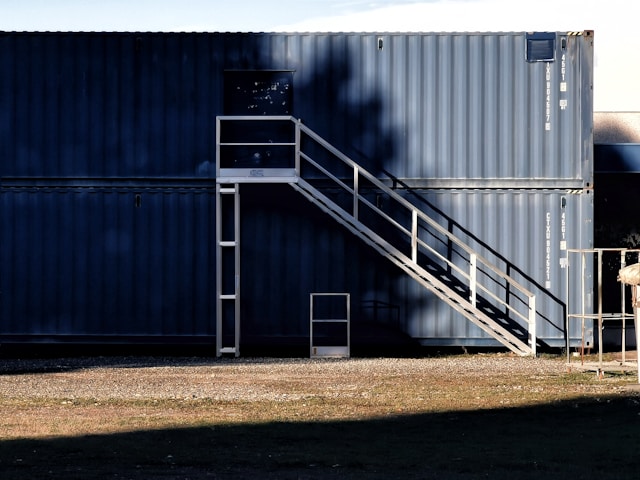
Stacking containers may be permitted on commercial properties but often requires engineering approval. Height limits vary by jurisdiction.
Stacked containers must meet structural and safety standards.
Check Fire and Safety Code Compliance
Fire codes may regulate container placement, access lanes, and spacing. Containers should not block fire routes or emergency access points.
Compliance with safety codes protects employees and reduces liability.
Assess Utility Connections and Modifications
Connecting containers to electricity, plumbing, or data lines often triggers additional inspections. Modifications such as doors, windows, or interior build-outs may require permits.
Ensuring modifications meet code requirements avoids enforcement issues.
Plan Delivery and Site Access
Delivery logistics must be coordinated to avoid disrupting business operations. Access routes, ground conditions, and clearance should be evaluated in advance.
Delivery planning support is available through the Shipping Container Delivery page.
Confirm Compliance with Local Business Regulations
Some municipalities impose additional rules for commercial storage, signage, or operational structures. Containers used in customer-facing areas may face additional scrutiny.
Reviewing local business regulations ensures full compliance.
Document Approvals and Inspections
Keeping records of permits, approvals, and inspections protects businesses during audits or inspections. Documentation demonstrates compliance and due diligence.
Organized records reduce risk and simplify future modifications or relocation.
Plan for Container Relocation or Removal
Commercial needs change over time. Planning for relocation or removal ensures containers remain flexible assets rather than permanent obstacles.
Relocation services are available through the Shipping Container Pick-Up page.
Frequently Asked Questions
Are containers always allowed on commercial property?
Most commercial zones allow containers, but permits or conditions may apply.
Do modified containers require permits?
Yes, modifications often trigger permit requirements.
Can containers be customer-facing?
Possibly, but additional design and safety standards may apply.
Do fire codes apply to container placement?
Yes, fire access and safety codes must be followed.
Key Takeaways
- Commercial zoning allows greater container flexibility
- Permits may still be required for certain uses
- Placement and safety rules must be followed
- Documentation protects businesses
- Planning ensures long-term compliance
Shipping containers can be deployed effectively on commercial property when compliance requirements are met. Using a structured checklist helps businesses avoid regulatory issues while maximizing the operational benefits of container-based infrastructure.
