

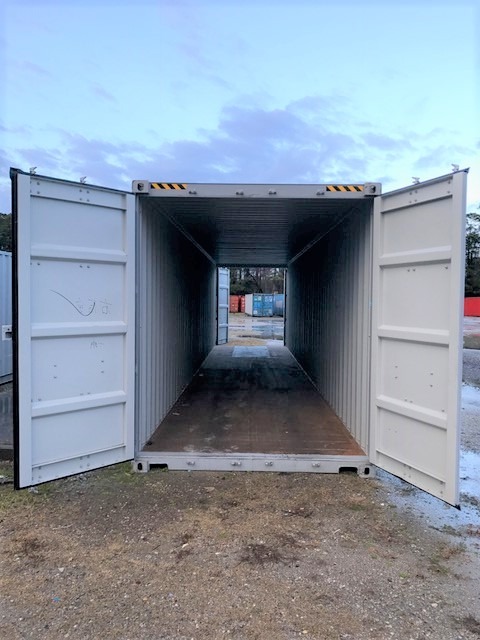

Tunnel Containers: End-to-End Access for High-Traffic Use
Written on January 24, 2026
by Adrian Stan
In the following categories: Container Use Cases
What Is a Tunnel Container?
A tunnel container is a shipping container designed with doors on both ends, creating a true pass-through layout. The name “tunnel” comes from the ability to enter at one end and exit at the other, just like walking through a corridor.
Tunnel containers are structurally the same as standard units, but their dual-door configuration changes how the space is used.
Why End-to-End Access Matters
In busy environments, a single entry point slows everything down. Tunnel containers solve this by offering:
- Continuous traffic flow
- Faster loading and unloading
- Easy access to items stored at the back
- Improved organization with aisle layouts
This makes them ideal for operations where multiple people need access at the same time.
Common Uses for Tunnel Containers
Tunnel containers are widely used in high-activity settings:
- Construction sites with frequent tool movement
- Warehouses organizing inventory by zone
- Material staging areas
- Equipment checkout points
- Temporary walk-through workspaces
They function more like mobile hallways than closed storage boxes.
Available Sizes and Configurations
Tunnel containers are available in standard formats:
- 20ft Tunnel Containers – Compact walk-through storage
- 40ft Tunnel Containers – Full-length access for large operations
- High Cube Tunnel Units – Extra height plus dual access
All units share the same steel construction and durability as standard containers.
Tunnel Containers vs Standard Containers
The core structure is identical. The difference is workflow:
- Standard Containers – Single entry, best for static storage
- Tunnel Containers – Two entries, best for active environments
If your team regularly moves in and out of the container, tunnel units save time and reduce congestion.
New vs Used Tunnel Containers
Tunnel containers are available in both conditions:
- New (One-Trip) – Clean appearance, minimal wear
- Used – Cosmetic wear, same structure, lower cost
Because of their specialized design, tunnel containers typically cost more than standard units.
Delivery and Placement
Tunnel containers are delivered the same way as standard units—typically by tilt-bed truck and placed directly on your site.
You can learn how placement works on our Shipping Container Delivery page.
Many buyers also choose Pay on Delivery or arrange transport through our Pick-Up Service.
Things to Consider Before Buying
Before choosing a tunnel container, evaluate:
- Whether both ends will remain accessible
- Traffic flow on your site
- Interior layout and shelving plans
- Budget compared to standard units
Dual access requires space on both ends but delivers significant operational efficiency.
When Tunnel Containers Are the Right Choice
If your storage area experiences constant movement, a tunnel container offers a clear advantage.
It transforms a steel box into a true pass-through workspace without sacrificing strength or security.
