

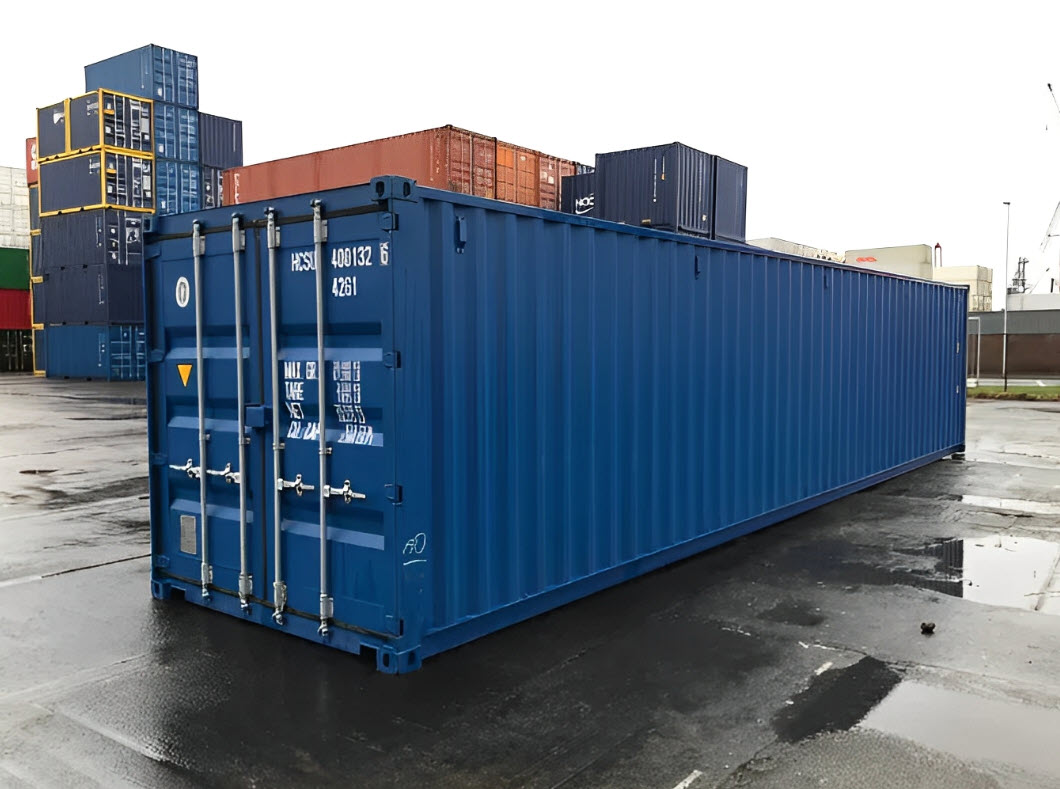

How Shipping Containers Are Made: Step-by-Step Manufacturing Process Explained
Written on November 10, 2025
by Alexandra Mkv
In the following categories: Did you know?
Shipping containers have revolutionized global trade, enabling safe, efficient, and high-capacity transportation of goods across oceans. Built to endure harsh marine conditions, these standardized steel boxes come in different sizes and configurations to transport almost any kind of cargo worldwide. But how exactly are shipping containers made?
What are shipping containers made of?
Most modern containers are made from Corten steel — a weathering steel alloy known for its strength and natural corrosion resistance. Some specialized containers use aluminum for lighter loads, or fiber-reinforced polymer composites for insulation-critical applications.
Every container features corrugated steel walls, a reinforced frame, and watertight doors. This design allows containers to stack securely on ships, trains, and trucks — the foundation of today's intermodal logistics system. To understand exactly what each part does, see our shipping container anatomy guide.
How shipping containers are made: step-by-step
Here's the full manufacturing process, from raw steel coil to a finished, ISO-certified cargo unit ready for the seas.
- Steel sheet preparation: Large rolls of Corten steel are uncoiled and cut into sheets — the building blocks for walls, doors, and roof panels.
- Surface treatment: Sheets are sandblasted and primed to remove contaminants and rust, ensuring proper adhesion for subsequent coatings.
- Corrugation: Flat sheets are pressed into a corrugated profile, dramatically increasing structural strength without adding weight.
- Panel assembly: Roof panels, floor braces, and wall sections are welded together. Square tubing is added along the top edges for rigidity.
- Floor frame construction: A separate steel base frame is fabricated to support the wooden flooring and corner castings.
- Door and corner post fabrication: Doors and corner posts are assembled independently then integrated into the floor frame before wall attachment.
- Main structure welding: All major components — walls, doors, and corner posts — are welded into a single unified box structure.
- Roof installation: The roof panel is welded to the top frame, completing the enclosure.
- Priming and painting: The entire container receives marine-grade primer and topcoat to resist corrosion in salt-air environments.
- Flooring installation: Marine-grade plywood panels are varnished and secured with screws and sealant to create a moisture-resistant floor surface.
- Door hardware installation: Handles, locking rods, hinges, and rubber gaskets are fitted to ensure doors are secure and fully weathertight.
- Waterproofing and testing: The container base is sealed, then the unit undergoes a watertightness test to confirm it meets ISO standards.
- Final inspection: Each unit passes quality control checks covering structural integrity, paint finish, door function, and watertight performance before leaving the factory.
Key components of a shipping container
Every container — whether a used 20ft standard or a new 40ft high cube — includes these core parts:
- Corner castings: The eight oval-slotted fittings used for lifting, stacking, and securing containers on ships, trucks, and rail.
- Cross members and rails: Structural steel running beneath the floor to distribute load evenly and support the plywood above.
- Corrugated walls: Increase rigidity and impact resistance while keeping overall panel weight low.
- Marine-grade plywood flooring: Treated for moisture resistance and rated to handle forklift traffic without delamination.
- Watertight doors: Fitted with rubber gaskets and multi-point locking rods for security and full weather protection.
Durability and design standards
All containers must comply with ISO 668 and CSC (Convention for Safe Containers) standards — international regulations ensuring containers are safe for stacking, lifting, and marine transport. The CSC plate on the left door of every container records its certification status and inspection history. With proper maintenance, a standard Corten steel container lasts over 25 years — sometimes significantly longer. See our guide on how long shipping containers last for the factors that affect lifespan in real-world conditions.
Once a container retires from active shipping, it typically enters a second life as storage, a building component, or a conversion project. The same manufacturing precision that makes these units reliable at sea makes them equally durable on the ground — which is why container storage solutions are increasingly popular for both residential and commercial use across the US.
Conclusion
Understanding how shipping containers are made gives you a real appreciation for the engineering behind what looks like a simple steel box. Thirteen manufacturing steps, strict ISO certification, and marine-grade materials go into every unit before it ever carries a pound of cargo — or gets delivered to your site.
Browse our available 20ft and 40ft containers or use our container pricing guide to understand current market costs before you buy.
Ready to buy a shipping container?
YES Containers supplies new and used 20ft and 40ft containers nationwide with direct-to-site delivery and a pay-on-delivery option on qualifying orders. Call YES Containers at (800) 223-4755 or reach sales rep Andrew Malone directly at (302) 596-8809.
