

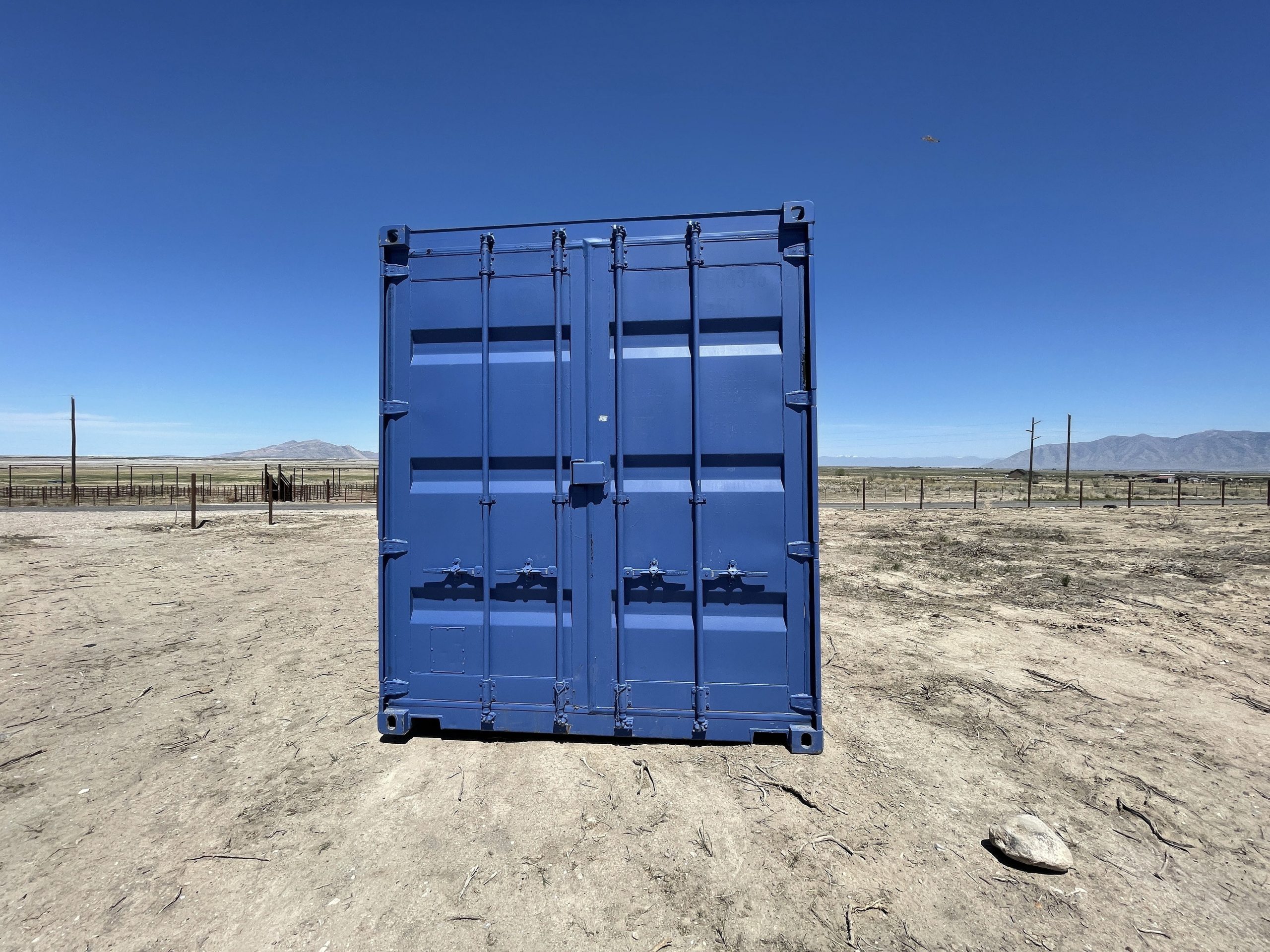

How to Paint a Shipping Container (Step-by-Step Guide)
Written on November 7, 2025
by Anna Nichita
In the following categories: How To, Shipping Container Maintenance & Fabrication
Used containers are an excellent choice for storage, conversion, or building projects — affordable, durable, and widely available. But after 7–10 years of global travel and exposure to harsh marine environments, even the toughest Corten steel starts showing wear. A fresh coat of paint is one of the most effective and cost-efficient ways to protect your investment and extend its lifespan significantly.
Why paint a shipping container?
Even containers listed as wind and water tight or cargo worthy may have small scratches, chipped paint, or early-stage surface rust. Left untreated, these become larger problems — rust spreads under paint, weakens wall panels, and eventually compromises weatherproofing. A proper paint job stops that cycle before it starts.
- Protection: Creates a barrier against rust, UV degradation, and weather damage.
- Longevity: Extends usable life by years, even in coastal or high-humidity climates.
- Appearance: Makes the container blend with your property, business, or build aesthetic.
- Preservation: Prevents minor surface issues from becoming structural problems.
Understanding what grade of container you're starting with affects how much prep work is needed before painting — see our used container grades guide for what WWT, CW, and AS-IS mean in practice.
Best paint for shipping containers
For long-term protection, use a water-based Direct-to-Metal (DTM) paint, preferably marine-grade. These are formulated to bond directly to steel without a separate primer coat, resist UV fading, and flex with the metal through temperature cycles without cracking.
- Rust-Oleum Marine Paint — widely available, good rust inhibition
- Sherwin-Williams Marine Coatings — professional-grade, excellent durability
- Valspar DTM Paint — good value for large surface areas
If visible rust is present, treat it first with a rust converter such as POR-15 Rust Preventive Coating — it chemically bonds to rusted steel and converts it into a hard, paintable surface that resists moisture, cracking, and peeling.
Materials you'll need
- Pressure washer or hose
- Low-grit sandpaper, wire brush, or angle grinder with flap disc
- Rust converter or steel primer
- DTM or marine-grade paint — 3 to 4 gallons covers a 20ft unit
- Airless paint sprayer (fastest) or heavy-nap roller
- Silicone sealant or fiberglass repair kit for holes
- White vinegar for mild rust neutralization on small spots
How to paint a shipping container: 5 steps
Step 1 — Clean the container
Pressure wash the entire exterior to remove dirt, salt residue, and loose paint chips. Pay close attention to the roof, corners, and under-door areas where water accumulates and rust typically starts. Let the surface dry completely — painting over damp steel traps moisture and causes immediate adhesion failure.
Step 2 — Remove rust and loose paint
Sand down all rusted areas using low-grit sandpaper, a wire brush, or an angle grinder with a flap disc. For small rust spots, white vinegar works as a mild acid wash to neutralize remaining oxidation. Let everything dry thoroughly before proceeding. For significant structural rust, see our container repair guide — at some point it makes more sense to replace the container than repaint it.
Step 3 — Patch holes and seal leaks
Inspect for pinholes, stress cracks, or door seal gaps. Repair small holes with silicone sealant or fiberglass patches — larger structural damage needs welded steel plate. All patched areas must be clean and fully dry before painting. Use our delivery inspection checklist as a reference for the areas most commonly damaged on used containers.
Step 4 — Apply rust converter or primer
Coat all previously rusted areas with rust converter using a brush or roller. This creates a chemically bonded base layer that seals out oxygen and stops rust from spreading under the new paint. Allow full cure time per the product instructions — rushing this step is the most common cause of paint failure on containers.
Step 5 — Paint the container
Apply the first coat of DTM or marine-grade paint evenly across all surfaces — sides, roof, and frame. Allow each coat to dry fully before applying the next. Three to five thin coats provide significantly better long-term protection than two thick ones, which are prone to sagging and uneven cure. Don't skip the roof — it takes the most UV and weather exposure of any surface.
Maintenance tips
- Lubricate door hinges and lock rods annually with a marine-grade lubricant to prevent seizing.
- Seal the floor with weather-resistant porch or patio paint to reduce interior moisture wicking through the plywood.
- Inspect the exterior each year and touch up any chipped or scratched areas before rust gets a foothold.
- Check door rubber seals annually — cracked or flattened gaskets let in water regardless of how well the exterior is painted.
If your container has severe corrosion across large areas, professional sandblasting and full respray is more cost-effective than extensive DIY prep — the surface profile from sandblasting also gives paint significantly better adhesion than hand sanding. For containers that are too far gone to paint economically, a replacement used 20ft unit delivered to your site often costs less than a professional repaint job on a heavily corroded container.
Keep your container in great shape
Painting is one of the highest-ROI maintenance tasks you can do on a container — a few hundred dollars in materials and a weekend of work can add years of serviceable life. With the right prep and marine-grade materials, even a tired WWT unit can look and perform like new.
If you're buying a container to paint and convert, we deliver new and used 20ft and 40ft units directly to your site across the US — including Florida, Texas, and Georgia.
Need a container delivered ready to paint?
YES Containers supplies new and used 20ft and 40ft containers nationwide with direct-to-site delivery and a pay-on-delivery option on qualifying orders. Call YES Containers at (800) 223-4755 or reach sales rep Andrew Malone directly at (302) 596-8809.
