

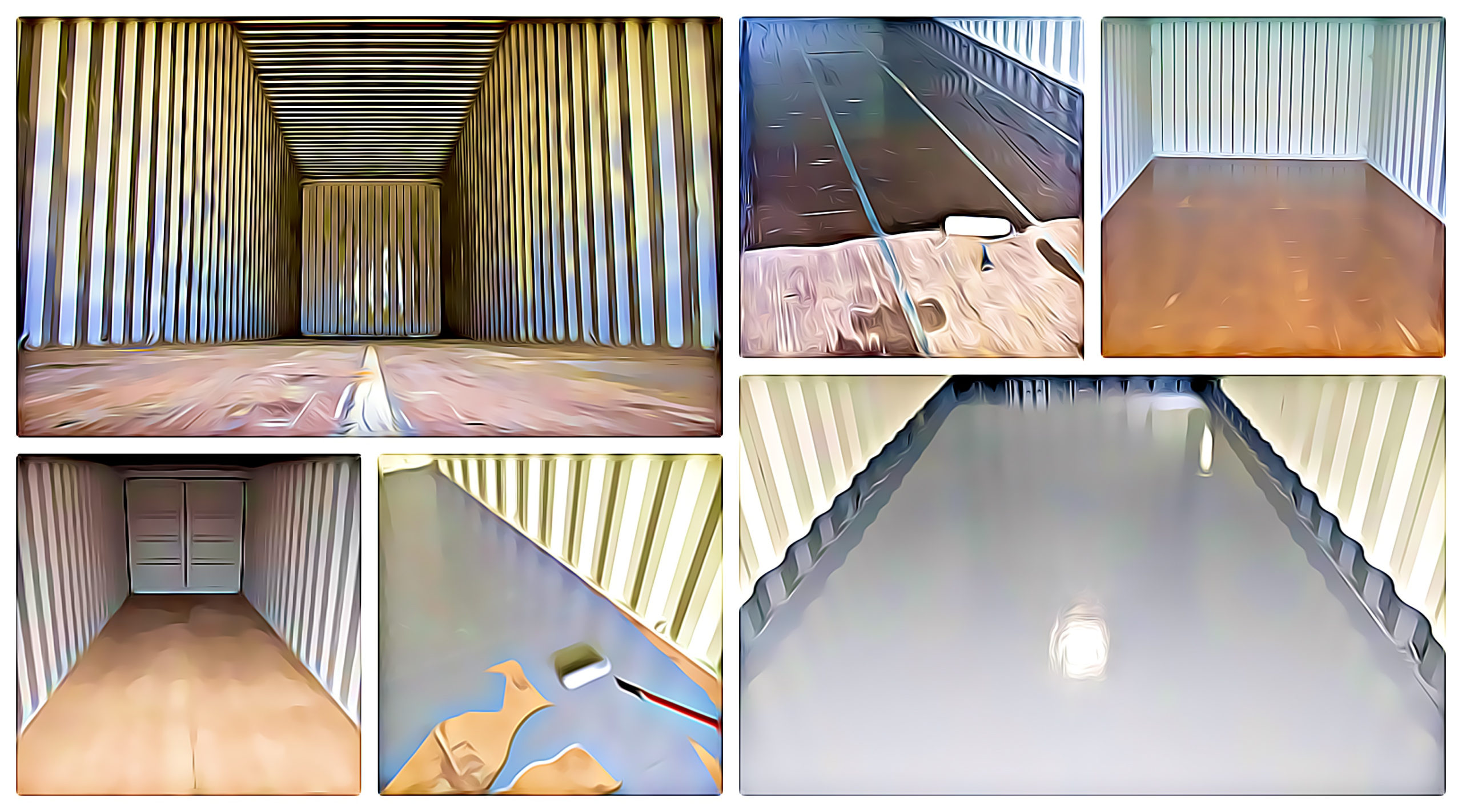

How to Repair or Replace Delaminated Shipping Container Floors: 2025 Guide
Written on November 9, 2025
by Anna Nichita
In the following categories: How To, Shipping Container Maintenance & Fabrication
One of the most common questions we get from buyers is about shipping container floors—whether they’re toxic, how durable they are, and when they should be replaced. If your container floor shows signs of delamination, cracks, or peeling, it’s time to assess your options. This guide explains how to repair, replace, or treat your container flooring safely and effectively.
Understanding Shipping Container Floor Materials
Most used shipping containers come with seaworthy, heavily treated 28mm (1.1-inch) marine plywood floors. These are usually made from birch, teak, or keruing laminates—woods known for their strength and water resistance. The floors are designed to handle several tons of internal cargo weight. However, after years of use, they often show signs of wear such as cracks, gouges, or missing layers.
Delamination occurs when the layers of plywood begin to separate due to moisture or stress. While minor delamination might not be an immediate concern, neglecting it can lead to structural issues down the line—especially if you’re converting your container into a home or workspace. You can check out our guide on Shipping Container Damage Prevention & Repairs for more maintenance insights.
Are Shipping Container Floors Toxic?
Many assume container floors are full of toxic chemicals—but that’s not always true. When in active shipping use, floors may have been treated with insecticides such as Basileum, Tailileum 400, or Radaleum. These treatments target pests, not humans, and lose potency over time. After containers retire from international shipping, most residual chemicals dissipate within a few years.
If you’re concerned, check the CSC plate for a section labeled “Timber Treatment Component.” This indicates whether the floor was chemically treated. When converting containers for living or working spaces, you can seal or replace the floors for added safety. For guidance on home conversions, see our related article Shipping Container Homes: Living Myths Debunked.
When Should You Repair or Replace the Floor?
It depends on your container’s intended use:
- Storage use: Minor cracks and peeling can often be patched or covered with protective flooring.
- Residential or office conversion: Replacement or full sealing is strongly recommended for health and aesthetics.
- Industrial use: Replace damaged panels to maintain structural integrity under heavy loads.
Not sure what condition your container floor is in? Learn more about container inspection and evaluation before purchase or renovation.
How to Replace or Repair Shipping Container Floors
1) Avoid Sanding the Floor
Never sand old container flooring—the dust can contain harmful particles. Leave the surface intact and use protective gear if you’re removing sections.
2) Full Floor Replacement
If the floor is severely damaged or you’re concerned about past chemical treatments, replacement is best. Start at one end of the container and lift the existing plywood. Remove any screws if accessible. Clean adhesive residue from the steel cross-members (“ribs”), apply marine-grade adhesive, and cut new plywood sections to fit. Screw the boards to the ribs every 12–18 inches for a tight fit.
3) Partial Floor Replacement
For localized damage, use a circular saw to remove the affected section. Make sure your cuts span two ribs to create a stable mounting surface. Clean, glue, and fasten the new plywood section. This approach saves both time and cost while restoring durability.
Treating and Sealing Container Floors
Whether you have a new or original floor, applying a protective sealant is always a smart move. Use a solvent-free polyurethane or epoxy coating designed for wood. Clean the floor thoroughly, ensure proper ventilation, and apply one or two coats for long-term protection. If you’re storing valuable items or using the container as a workspace, consider pairing this step with pest-proofing measures.
Cost vs. Function: Making the Right Choice
The choice between repair and replacement depends on your goals and budget. If your container is for farm or ranch storage, a quick patch and seal might be sufficient. But if you’re converting for living, retail, or office use, invest in high-quality marine plywood and non-toxic coatings. It’s a one-time expense that pays off in safety and longevity.
FAQs About Container Floor Repair
1) What’s the best wood to use for replacement?
Marine-grade plywood such as birch or keruing provides excellent water resistance and load strength.
2) Can I use vinyl or laminate flooring on top?
Yes. You can install new flooring materials directly on top of the sealed plywood for a cleaner look, especially in conversions or offices.
3) Are chemical sealants necessary?
For most storage applications, sealing is optional but highly recommended. For living or food storage purposes, always seal the floor with a non-toxic product.
4) How often should I inspect the floor?
Inspect your floor at least once per year for delamination, cracking, or moisture damage. Address issues early to prevent larger repairs later.
5) Can I repair a floor myself?
Yes—basic repairs can be DIY projects if you have carpentry experience. However, for full replacements or residential conversions, consult a professional.
Related Resources
- Container Inspection Process for Sight-Unseen Purchases
- Pest-Proof Containers: Wind, Watertight & Rodent Storage
- How Long Do Shipping Containers Last?
- Shipping Container Damage Prevention & Repairs
- How to Keep Rust Away From Your Shipping Container in 2025
Need a replacement container or floor-ready unit? Check out our Shipping Container Sales & Services 2025 page or Get a Quote today to get matched with the right solution for your project.
