

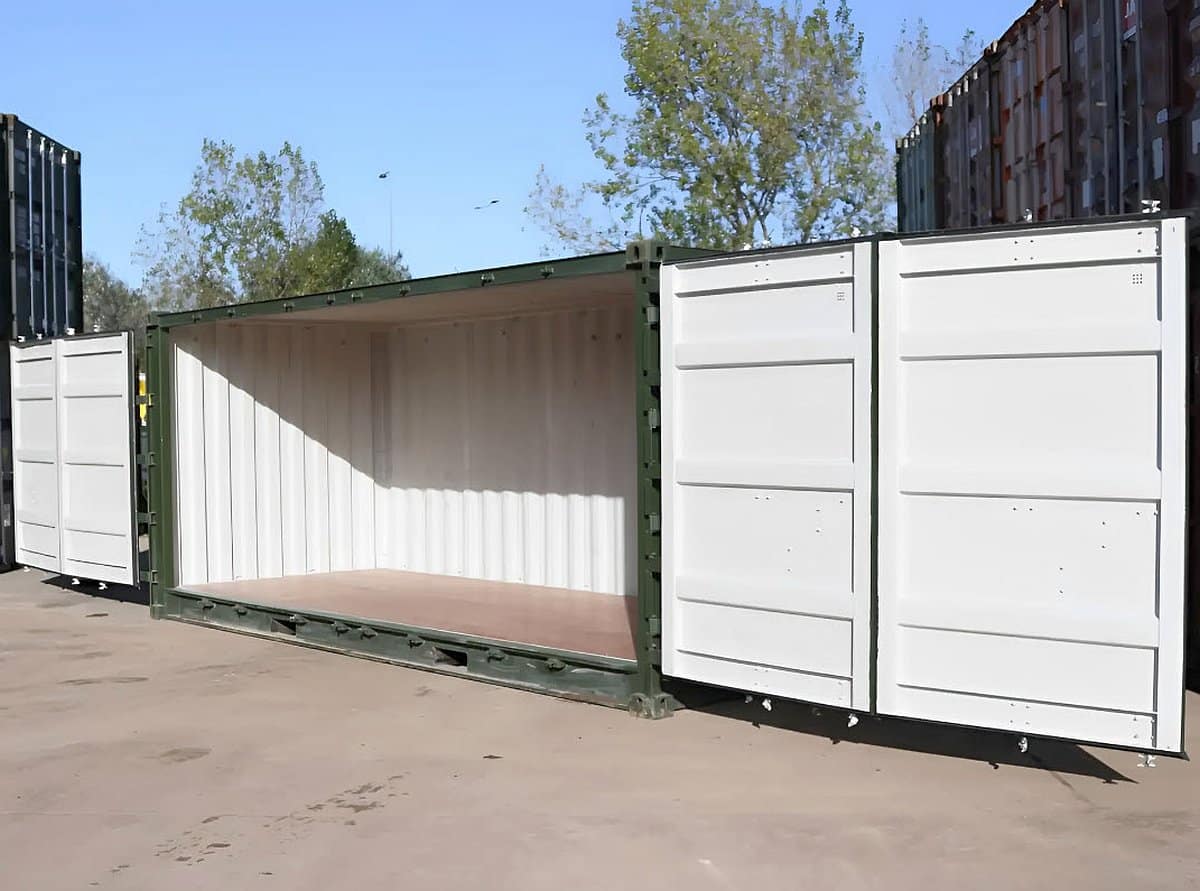

What Is a Conex Box? Everything Buyers Need to Know
Written on February 18, 2026
by Adrian Stan
In the following categories: Did you know?
If you've been searching for storage containers on job sites, military surplus forums, or industrial supply sites, you've almost certainly encountered the term "Conex box." It shows up interchangeably with "shipping container," "sea can," and "dry box" — and for good reason. They all describe the same physical product. Understanding where the Conex name comes from, what it means in practice, and how to buy the right unit saves time and prevents confusion when you're ready to purchase.
Where the Name "Conex" Comes From
The term Conex is an abbreviation of "Container Express," a standardized container system developed by the United States Army in the early 1950s. The original CONEX container was designed to solve a persistent military logistics problem: moving equipment and supplies from central warehouses to forward positions efficiently, without repacking cargo at every transfer point.
The original military CONEX was smaller than today's ISO containers — typically 8.5 × 6.25 × 6.75 feet — and constructed to be stackable, lockable, and transferable between trucks, rail cars, and ships. The concept proved so effective that it directly influenced the development of the standardized intermodal container system that now moves the majority of global trade.
By the time ISO (International Organization for Standardization) formalized container dimensions in the 1960s and 1970s, "Conex" had already entered the vocabulary of construction crews, military logistics personnel, and industrial operators. The term stuck — particularly in the US — even as the industry standardized on "shipping container" as the official term.
Conex Box vs. Shipping Container: Is There Actually a Difference?
In modern commercial use, no. When someone lists a "Conex box for sale" or a contractor asks for a "Conex" on site, they are referring to the same ISO-standard steel intermodal container sold as a shipping container. The construction, dimensions, door hardware, corner castings, and load ratings are identical.
The terminology difference is generational and industry-specific:
| Term | Common In | Origin |
|---|---|---|
| Conex box | Construction, military, industrial sectors | US Army Container Express program, 1950s |
| Shipping container | Logistics, international trade, retail sales | ISO standardization, 1960s–70s |
| Sea can | Canada, maritime industries | Colloquial reference to ocean freight containers |
| Dry box | Freight and logistics industry | Distinguishes standard containers from refrigerated (reefer) units |
| ISO container | Technical and engineering contexts | International Organization for Standardization |
All of these terms describe the same corrugated steel container with lockable double cargo doors, corner castings for crane or forklift handling, and wind and water tight construction.
Standard Conex Box Sizes
Modern Conex boxes (ISO shipping containers) are available in standardized sizes. The two most common in the US market are the 20ft and 40ft standard units, with high cube variants offering an additional foot of interior height.
| Size | External Dimensions | Interior Volume | Common Use |
|---|---|---|---|
| 20ft Standard | 20' × 8' × 8'6" | 1,169 cu ft | Compact storage, small job sites, residential |
| 40ft Standard | 40' × 8' × 8'6" | 2,385 cu ft | Large storage, multi-crew job sites, commercial overflow |
| 40ft High Cube | 40' × 8' × 9'6" | 2,700 cu ft | Tall equipment, workshops, container conversions |
For full interior dimensions and door opening measurements: How to Select the Right Shipping Container Size
Conex Box Grades: What Condition to Expect
Conex boxes are sold in two main condition grades. Understanding the difference prevents surprises on delivery day.
- Used / WWT (Wind and Water Tight) — Structurally sound with doors that seal properly and no active leaks. Will show surface rust, dents, and faded paint. This is the standard grade for construction and storage applications where appearance doesn't matter. Most cost-effective option.
- One-Trip (New) — Has made a single ocean crossing from the manufacturer. Near-new condition with minimal wear. Preferred for conversion projects, retail-facing placements, and any application where container appearance matters.
How container grades affect pricing and longevity: Container Grades: Price and Longevity Guide
Military Conex Boxes: Are They Different?
Surplus military Conex boxes do exist and occasionally appear on the resale market. Original military CONEX containers are smaller than modern ISO units and were built to military specifications rather than ISO commercial standards. They are generally not interchangeable with modern shipping containers for standard storage or transport applications.
Modern military operations also use standard ISO containers alongside purpose-built military variants. When buyers search for "military Conex box," they usually mean a heavy-duty used container — the ISO-standard unit — not actual surplus military equipment. For more on this distinction: Military Conex Boxes: Why They're Built to Last
What to Check Before Buying a Conex Box
Whether you call it a Conex box or a shipping container, the pre-purchase checklist is the same:
- Confirm WWT grade — The container should be certified wind and water tight. Ask the seller to confirm this explicitly, not just implied.
- Verify door function — Doors should open fully, close completely, and lock securely. Bent door frames or damaged gaskets are the most common functional issue on used units.
- Check floor condition — Look for soft spots, rot, or structural damage. Standard container floors are hardwood and durable, but severe abuse can compromise them.
- Know your depot — A legitimate seller should be able to specify which depot your container is coming from. See: Is Buying a Shipping Container Online Safe?
- Plan delivery access — A 20ft container requires ~60–70 feet of clear approach; a 40ft needs 80–100 feet. Confirm access before scheduling.
Conex Box Pricing
- Used 20ft WWT: $2,000–$3,500
- Used 40ft WWT: $2,500–$4,500
- Used 40ft High Cube: $3,000–$5,000
- One-Trip 20ft: $3,500–$5,500
- One-Trip 40ft: $4,500–$6,500
Pricing is depot-specific and varies by region. Delivery adds approximately $500 for the first 100 miles from the nearest depot. Get a quote by ZIP code for current pricing at your nearest location.
Related Reading
- Conex Storage Containers for Sale: What to Know Before You Buy
- What Is a Conex Box? History, Uses, and Buying Guide
- ISO Containers Explained: Sizes, Grades, and Use Cases
- 20ft Shipping Container Buyer's Guide
- 40ft Shipping Container Buyer's Guide
Key Takeaways
- "Conex box" and "shipping container" describe the same ISO-standard steel unit — the difference is terminology, not construction
- The Conex name comes from the US Army's Container Express program developed in the 1950s and predates modern ISO standardization
- Standard sizes are 20ft, 40ft standard, and 40ft high cube — same dimensions regardless of what the seller calls them
- Used WWT is the right grade for most storage and job site applications; one-trip for conversions and visible placements
- Original military CONEX containers are smaller and not interchangeable with modern ISO units — most "military Conex" searches refer to heavy-duty used ISO containers
To check current Conex box availability and pricing at the depot nearest you, get a quote by ZIP code or call (800) 223-4755.